A Tourist in Paris with a Film Camera
The moment I started to think of myself as a photographer happened 115 metres above Paris, frustrated by a safety fence and thinking there had to be a better way to take a picture of the view.
Paris was supposed to be just a family holiday. But standing on the Eiffel Tower with a camera in my hands, something shifted. For the first time in years, I found myself thinking not just about taking a picture, but about how to create one.
I don't need to tell you that Paris is quite simply a fantastic city. The elegance of its architecture, the sheer vibrancy of its neighbourhoods and boulevards, the beauty of some its most iconic buildings. What better place to realise that there's a creative side to you that you want to give some space to?
But there's another thing that I really like about Paris. It's a really walkable city. The streets and neighbourhoods naturally lend themselves to aimlessly ambling around. It feels intrinsically safe - at least in daylight - and the distances between different parts of central Paris are never too great. Each neighbourhood has its own distinct feel, and what I really like about Paris - and indeed about France more broadly - is that each neighbourhood has retained its own independent grocery stores, bakeries (of course), bars and cafes. There are none of the monolithic high streets that we see in our towns and cities with endless branches of Starbucks and other national and international chains.
The Breakthrough Moment
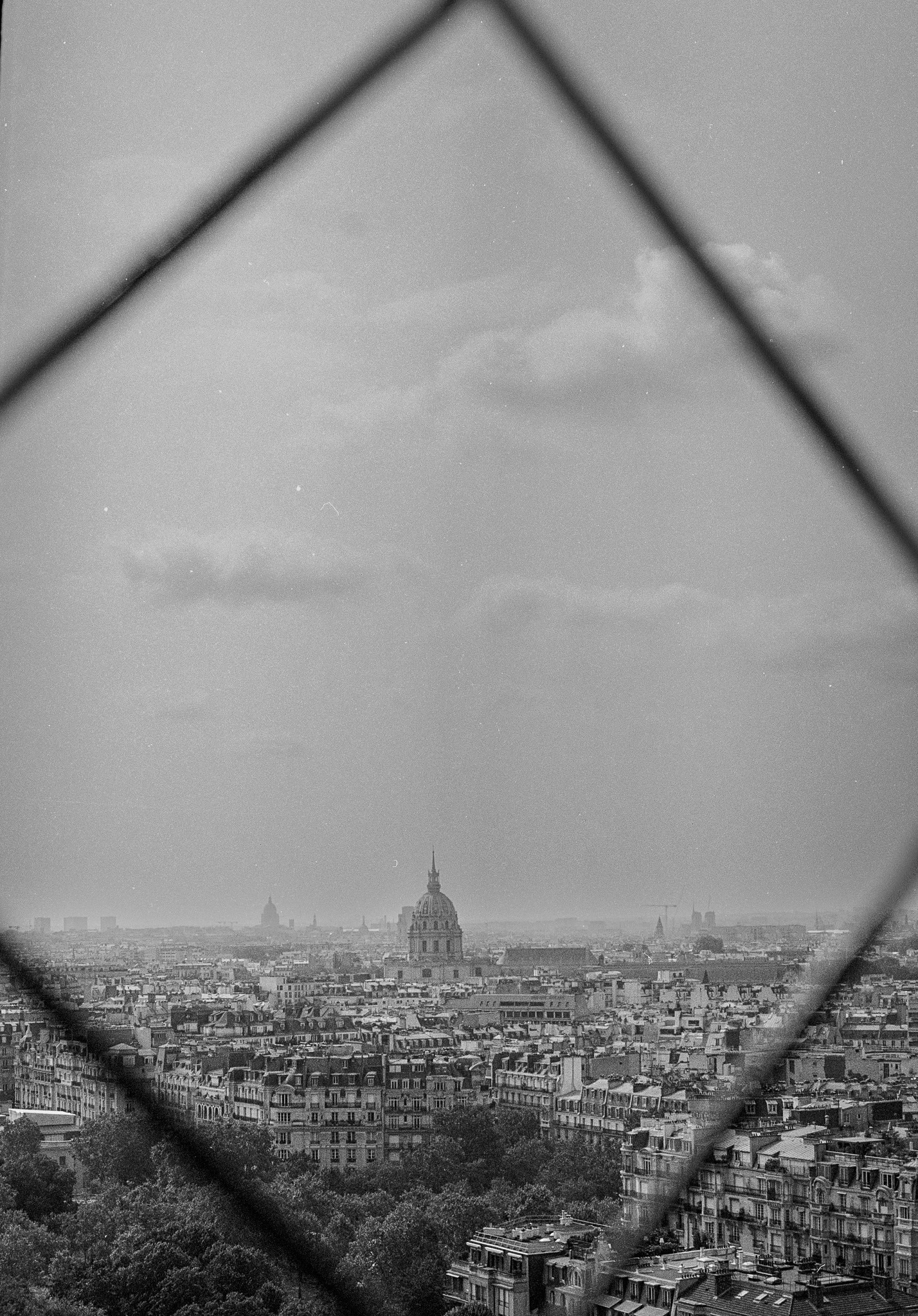
The Pantheon and Paris skyline.
This shot from the Eiffel Tower's second platform changed everything for me. Initially frustrated by the safety fencing blocking my view, I had a breakthrough: instead of fighting the obstacle, what if I used it? The fence wires became a creative frame, focusing attention on the Pantheon in the distance. It's not technically perfect, but it represents the exact moment I stopped being a tourist with a camera and started thinking like a photographer.
Paris is called the city of lights, and as an early adopter of gas and electric street lighting in the 17th-19th centuries, it was literally brighter than most cities at night. Yet ironically, with 400 ISO film in my camera and no tripod, most of my shots in this "city of lights" were taken in broad daylight - exactly when photography wisdom says you shouldn't shoot.
Architectural Challenges
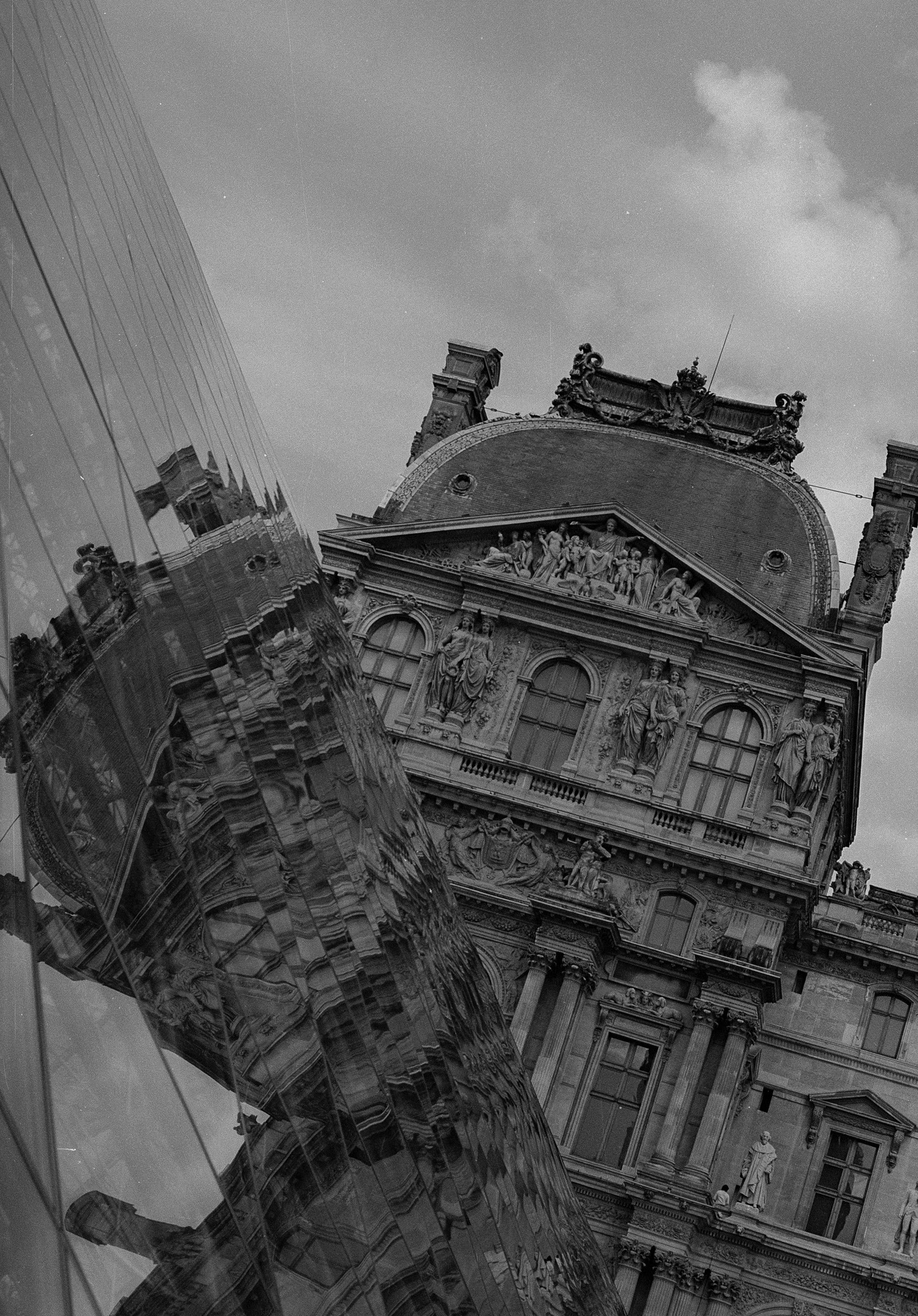
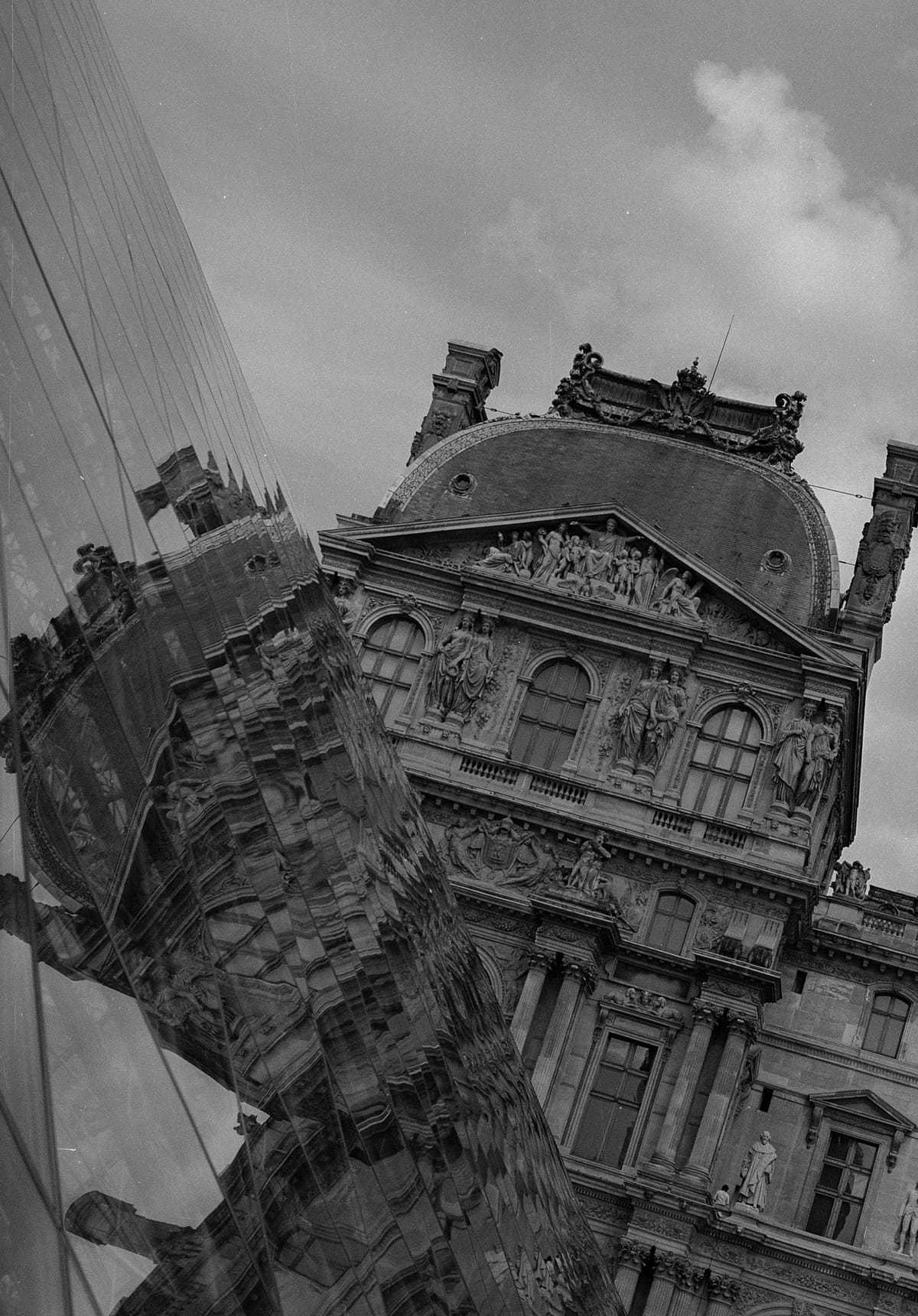
The Louvre.
Anyone with any knowledge whatsoever of photography will tell you that you should avoid taking pictures in the middle of the day - especially in very bright sunny conditions. The light is very harsh at this time of day, shadows are really prominent, and colours feel washed out by the brightness of the sun. But when you're on holiday with the wife and two teenage boys in tow, you can't be too fussy about when you're out and about.
At the Louvre, surrounded by magnificent palace facades and hordes of tourists in the hottest part of the day, I struggled to capture the building's grandeur. Then I thought about using the glass pyramid as a counterpoint - its modern geometry offsetting the classical architecture. In such harsh lighting conditions it was the best I could do, and I'm actually pretty pleased with the end result.
Finding Poetry in Details
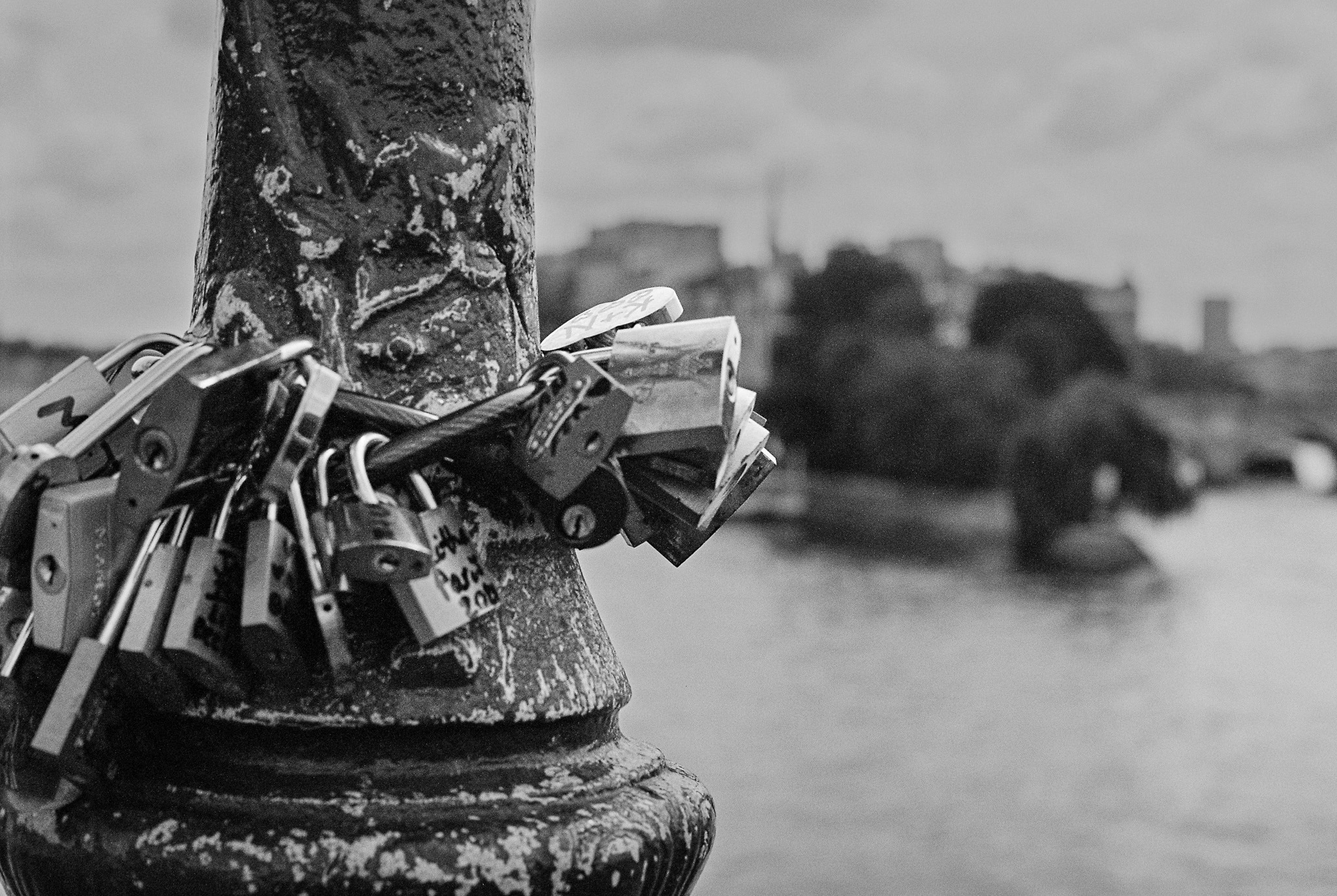
Love locks on the Pont de l'Archevêché
There's nothing better than criss-crossing Paris's bridges when exploring the city. Each one offers a different perspective, a different story. The Pont de l'Archevêché had hundreds of padlocks attached to it - a romantic tradition where couples attach "love locks" to symbolise their unbreakable bond. The idea is that their love will be as permanent and secure as the lock, which can never be opened again since the key is thrown away.
The city of Paris isn't fond of this practice - they periodically remove locks from all bridges, which is a shame as they look beautiful, poignant and touching clustered together. I love how this image captures both the individual stories and the collective romance of the gesture.
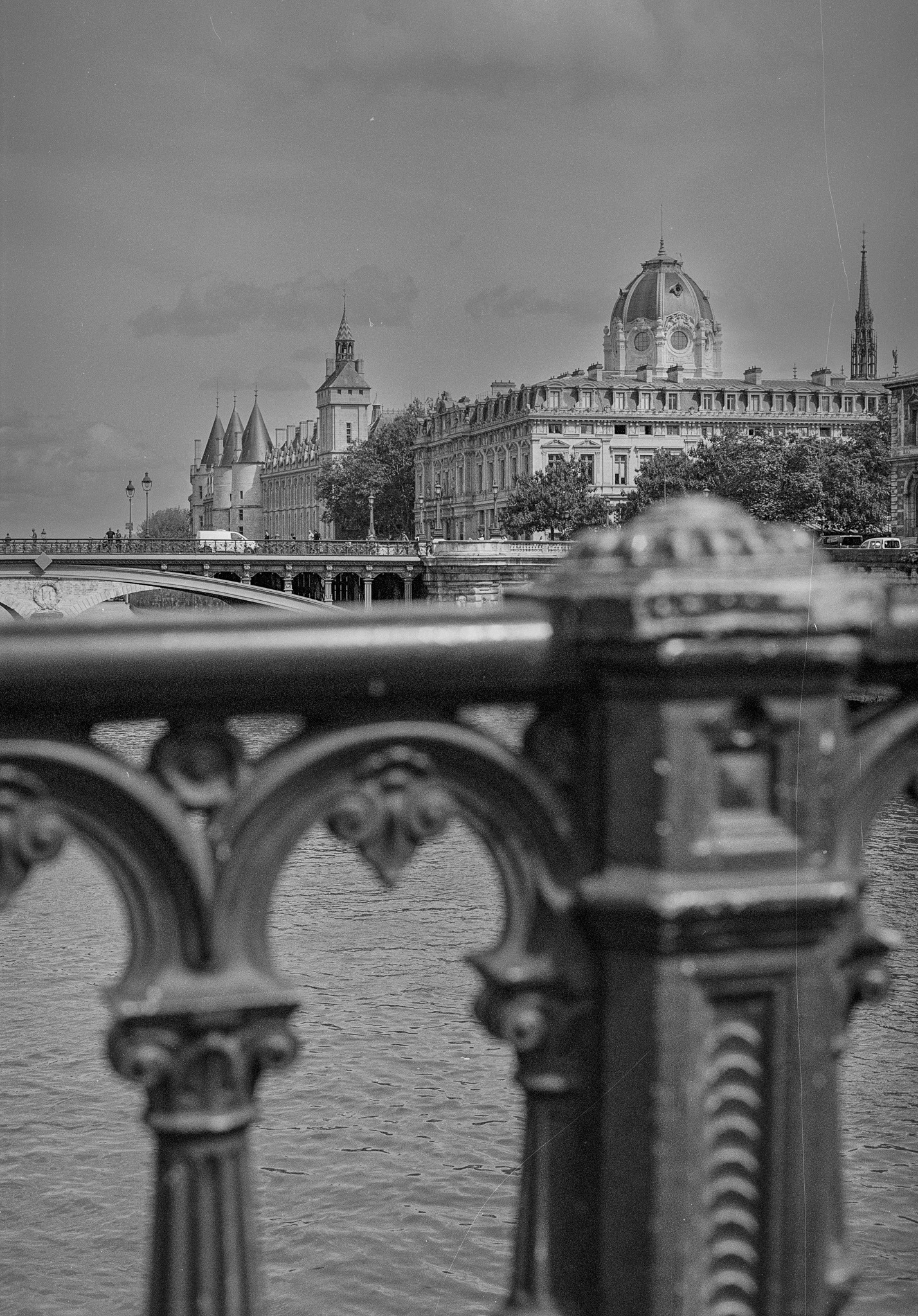
Pont au Double
Here's another bridge view - the Pont au Double taken from the Pont de l'Archevêché. I like using the foreground elements out of focus to give a sense of depth to the picture, layering the scene to draw your eye through the composition.
A Reminder of Mortality
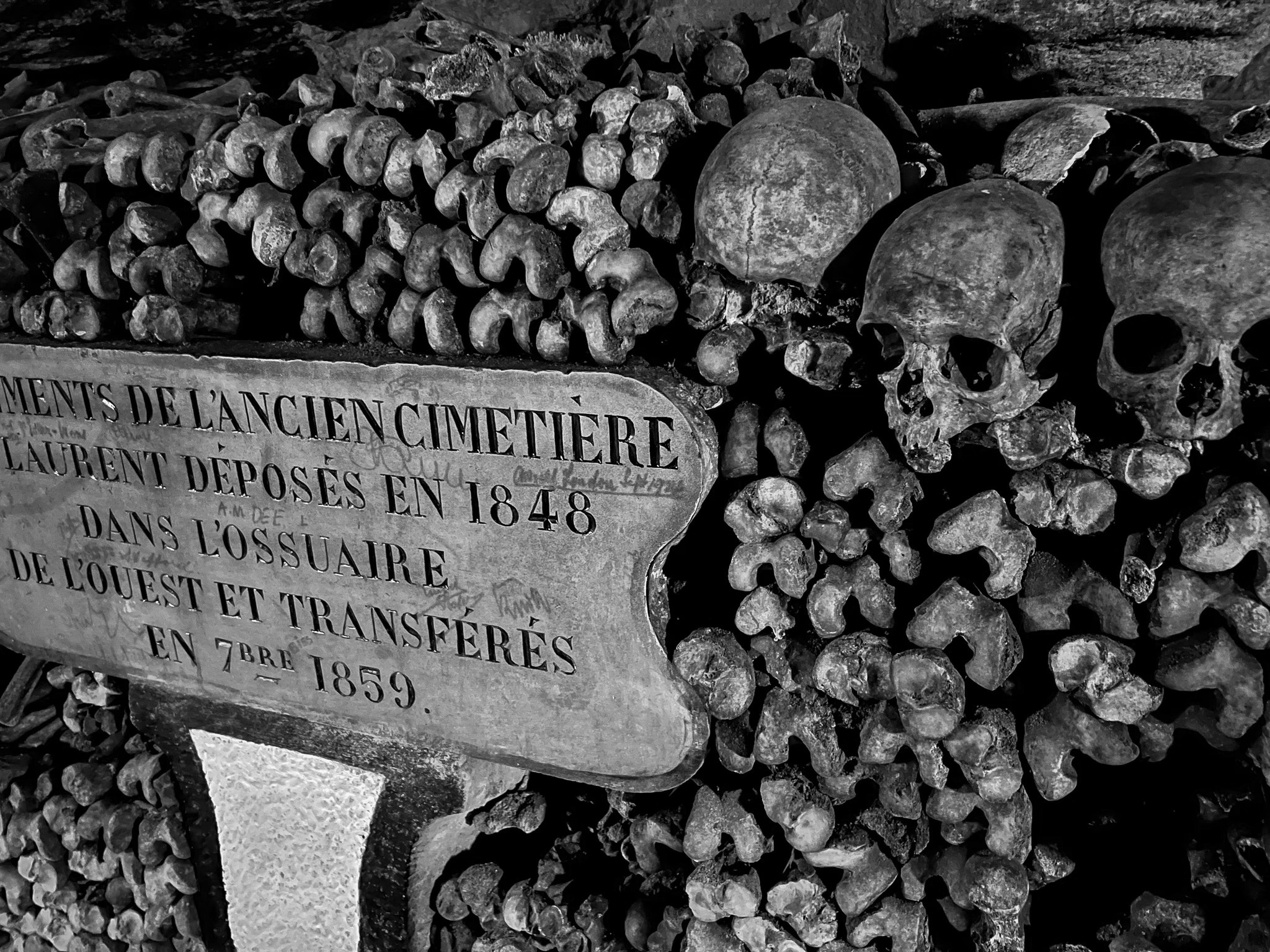
The Catacombs
And just to prove I'm not completely dogmatic about only using film, here's an image taken on my iPhone down in the Catacombs. What a place. I've never been somewhere so surreal - surrounded by thousands of skulls of those long passed, whose remains were moved when the city centre cemeteries became so full they were becoming a public health hazard.
I thought I'd find it creepy. But instead I found it strangely compelling, and a really powerful reminder that none of us have that long on this earth. So I better get out there and take more pictures!
Hope you enjoyed this post and the pictures. The beauty of film photography is that every frame counts - it forces you to really see, to think about composition, to wait for the right moment. Even when that moment happens to be in the harsh midday sun with moaning teenagers in tow.
If you enjoyed this post, I'd be really grateful if you'd share it or re-stack using the button below. Next week, I'll be back with more frames to share.
Thanks for reading!