Fence-Sitting: A Third Way"
There’s a subtext in Substack writing on photography that you are either part of the digital tribe or you are part of the analogue tribe. You’re partial to pixels or you’re smitten with silver halide. There seems to be little room for sitting on the fence.
But I’ve had two experiences in the past few weeks that have suggested to me that the way forward for me may be a bit of fence sitting!
My analogue experience was my first foray into properly printing my own exposures.
I’d already invested in the kit I needed to develop my own black and white negatives at home a little while back (developing tank and chemicals etc), but I knew that I wanted to move into the world of printing at some point. We all know that there is something tangibly different to seeing your images printed on photographic paper that just makes the whole experience deeper and more immersive than when you look at the same picture on a screen (even if you have developed that picture from film and scanned it so you know it exists in the non-digital space). For me it’s the difference between reading a book on a kindle and actually holding the real book and being able to feel and smell the paper. The kindle is a perfectly readable experience but it will (in my opinion) never replicate the immersiveness of holding a real book in your hands (sorry to all you kindle readers out there).
So eventually I decided to take the plunge and invest in an enlarger and all the associated paraphernalia needed to print my images. I’m really lucky in that we have a space that we converted in my garage a few years back that was designed to be used as a utility room. It already has a large butler-type sink in it and crucially does not have any windows so can easily be sealed off from daylight - just about perfect to function as my dark room.
After scouring eBay or more precisely, finding myself down very many photography kit-related rabbit holes, I eventually settled on a deal for an old Gnome Beta II enlarger, complete with a high quality Dallmeyer lens. This thing looks like a space ship. It was (I think) first produced in the 1960s and it looks every bit the product of its time and it came complete with all the trays, chemicals, and a wonderfully retro lighting control switch.
So I brought it home, commandeered the room (laundry that day would have to wait!), set up the spaceship and prepared to print my first print. Now I’d love to say it all went smoothly but of course that would be a slight fabrication (and far less interesting to write about). I have discovered that analogue printing is a combination of science, art and a great deal of perseverance. I’ve never had any formal darkroom teaching so I had to find my way a bit with it. YouTube is an amazing resource but, for obvious reasons, there aren’t many videos out there of the actual process of fixing an image from the enlarger onto photo paper and that for me was the tricky bit. It took me at least ten experiments to work out the right combination of enlarger height, lens focus, aperture and exposure time needed to generate a passable image.
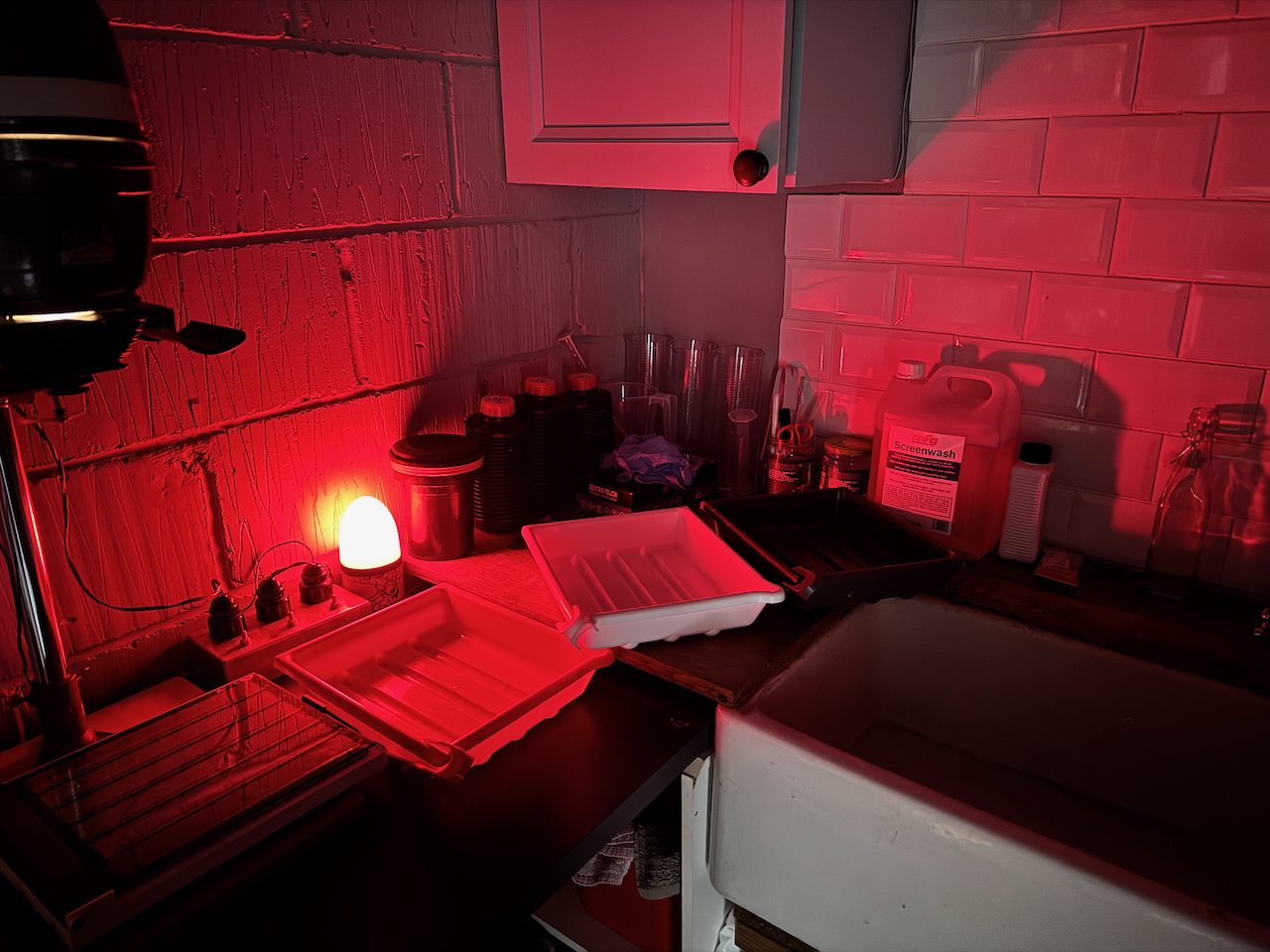
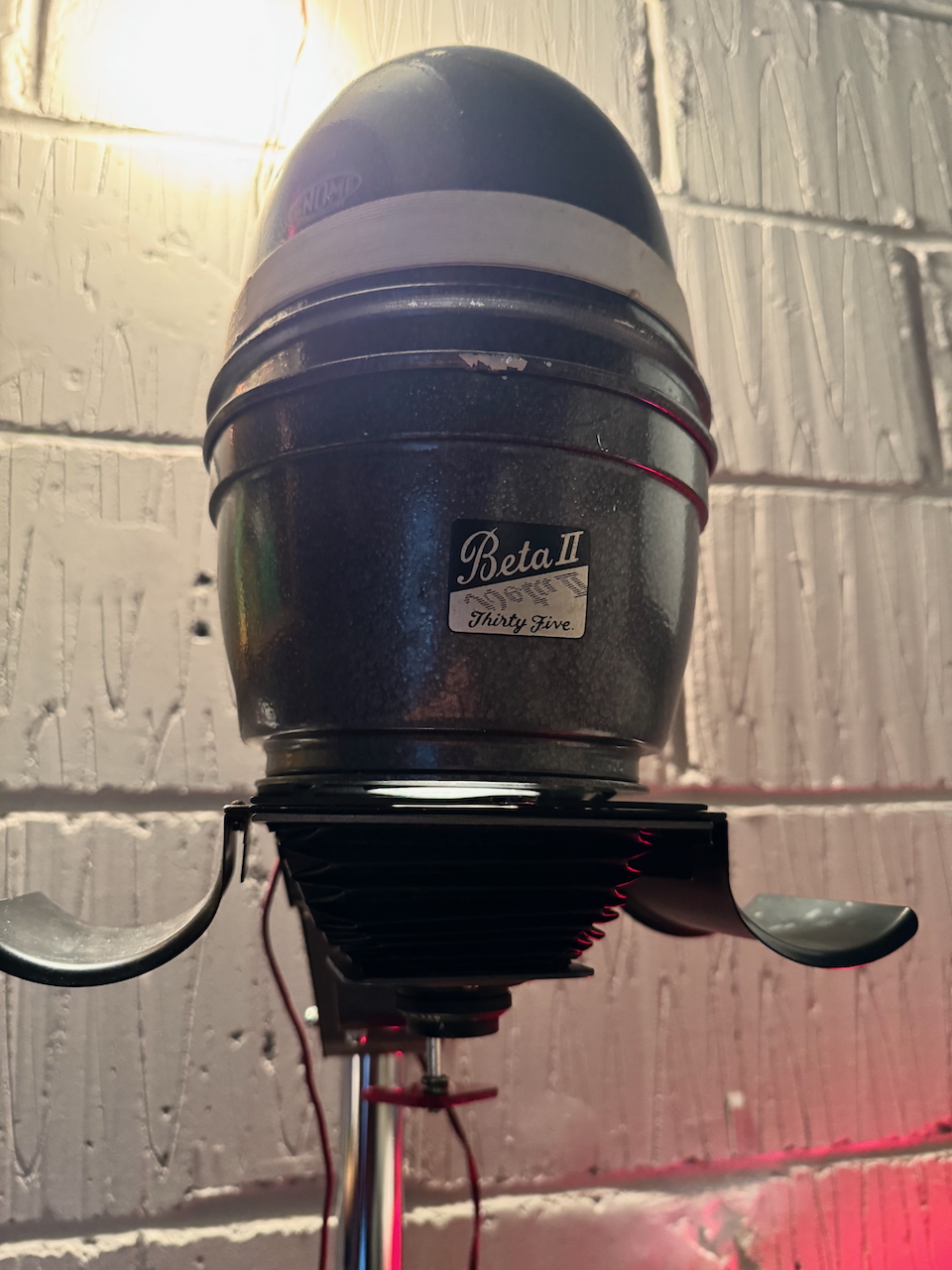
There’s something magical about darkroom printing; the ritual filling of your three baths of developer, stop and fixer, the gentle motion of rocking the baths to make sure the photo paper is fully immersed, the aroma of pungent chemicals, the glow of the red safe light.
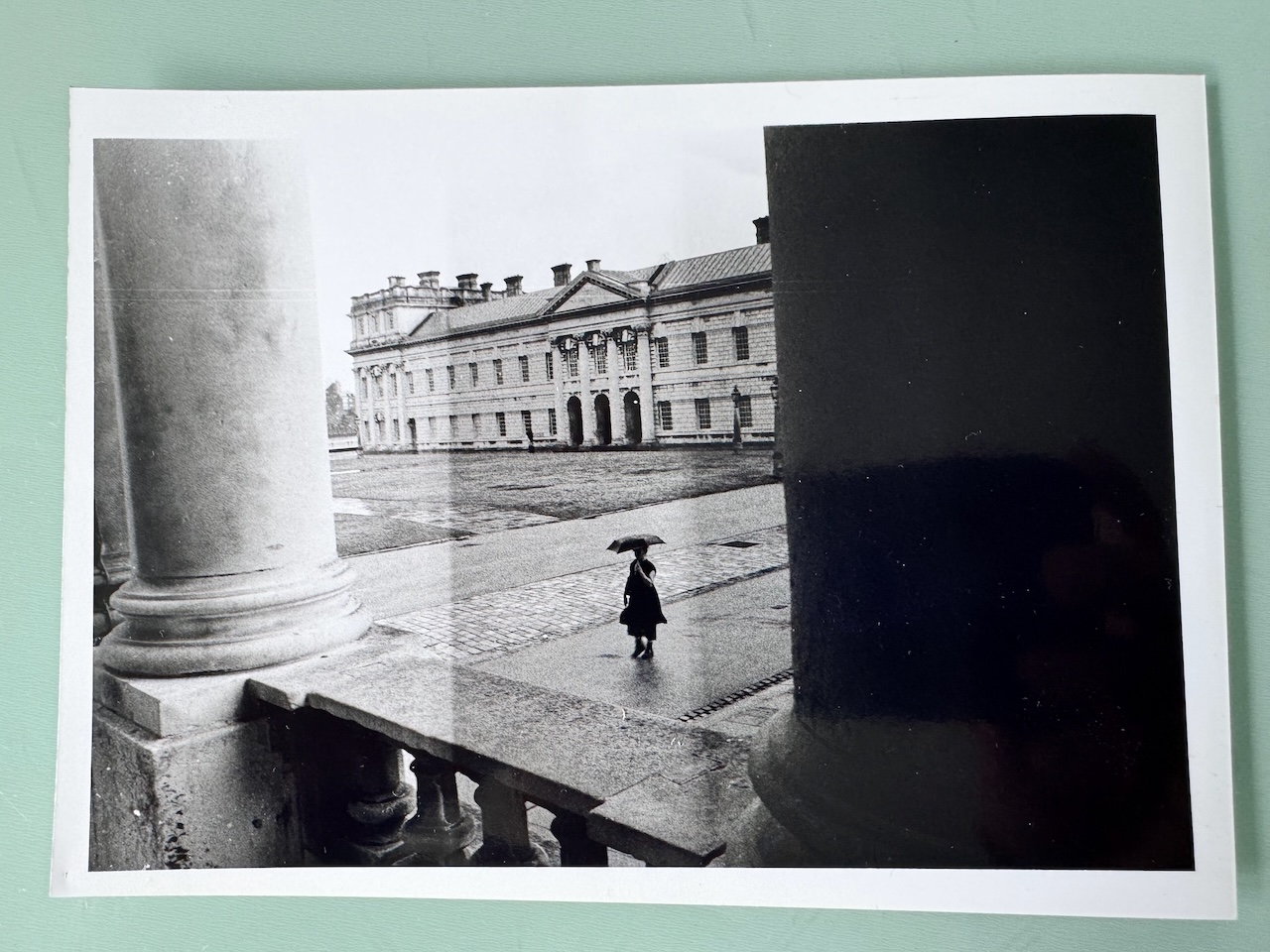
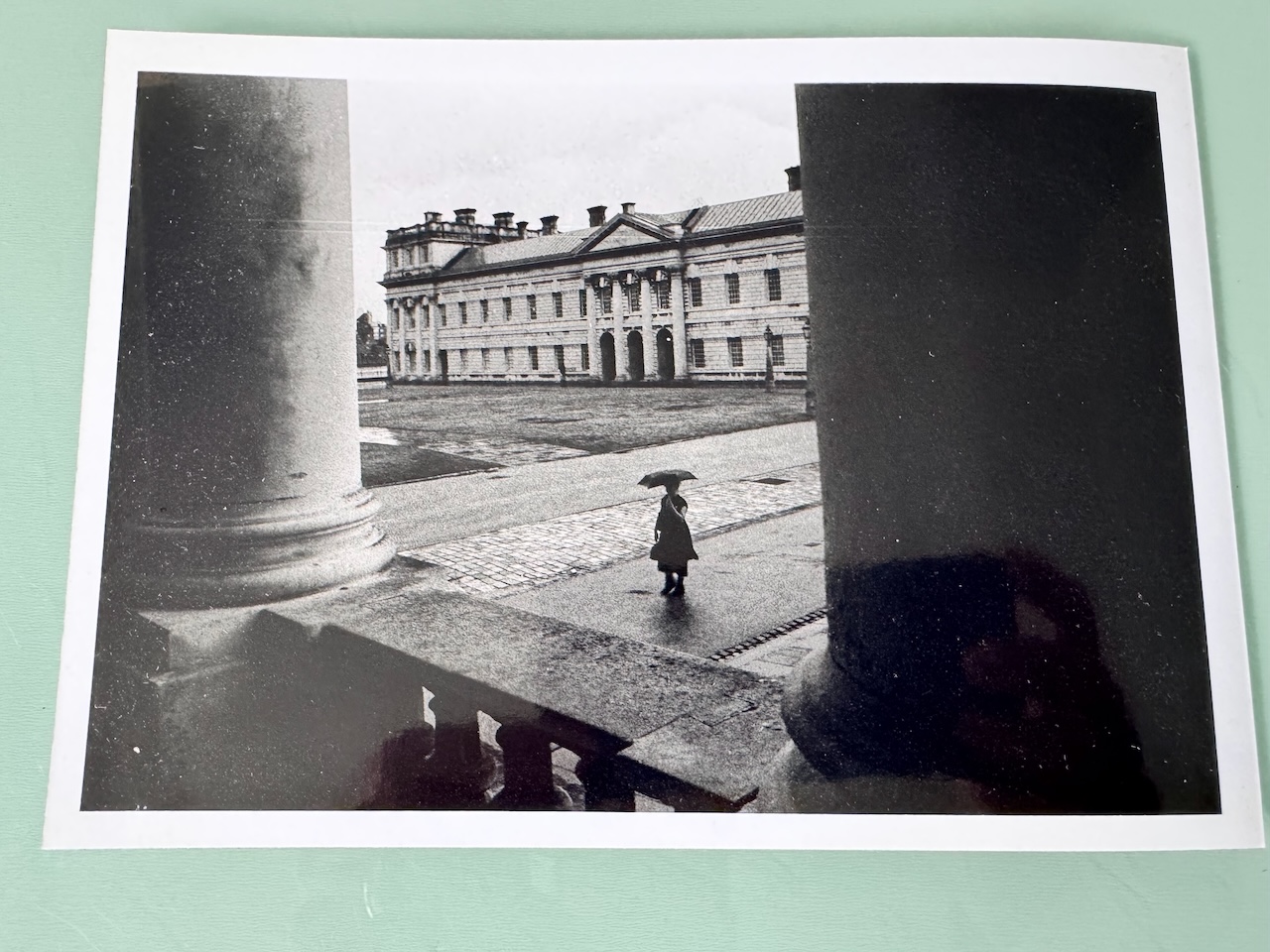
There’s a moment when you take the photo paper out from under the enlarger and put it in the tray of developer and you can see the image appearing on the paper. In that moment you think: I’ve done it. The photo I chose to print was of the Royal Naval College in Greenwich - and my excitement built as the image of the colonnade framing a solitary passer by began to emerge. But then, as the seconds tick by, you realise something’s not right and the image you can see in the tray gradually disappears into a blackness, swallowed up in a chemical soup of overexposure. Each time I thought I’d got it right. Each time my optimism faded as the image disappeared from my view.
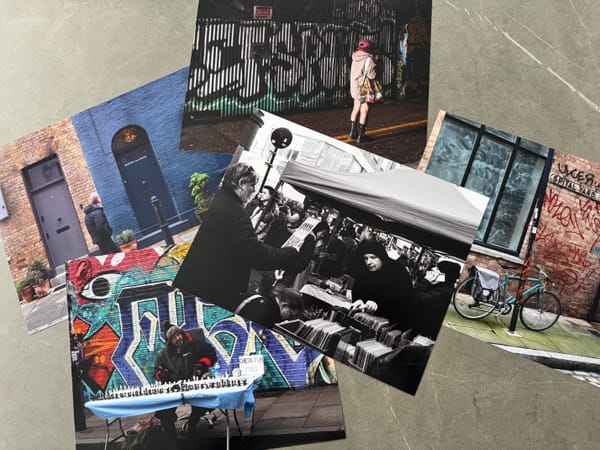
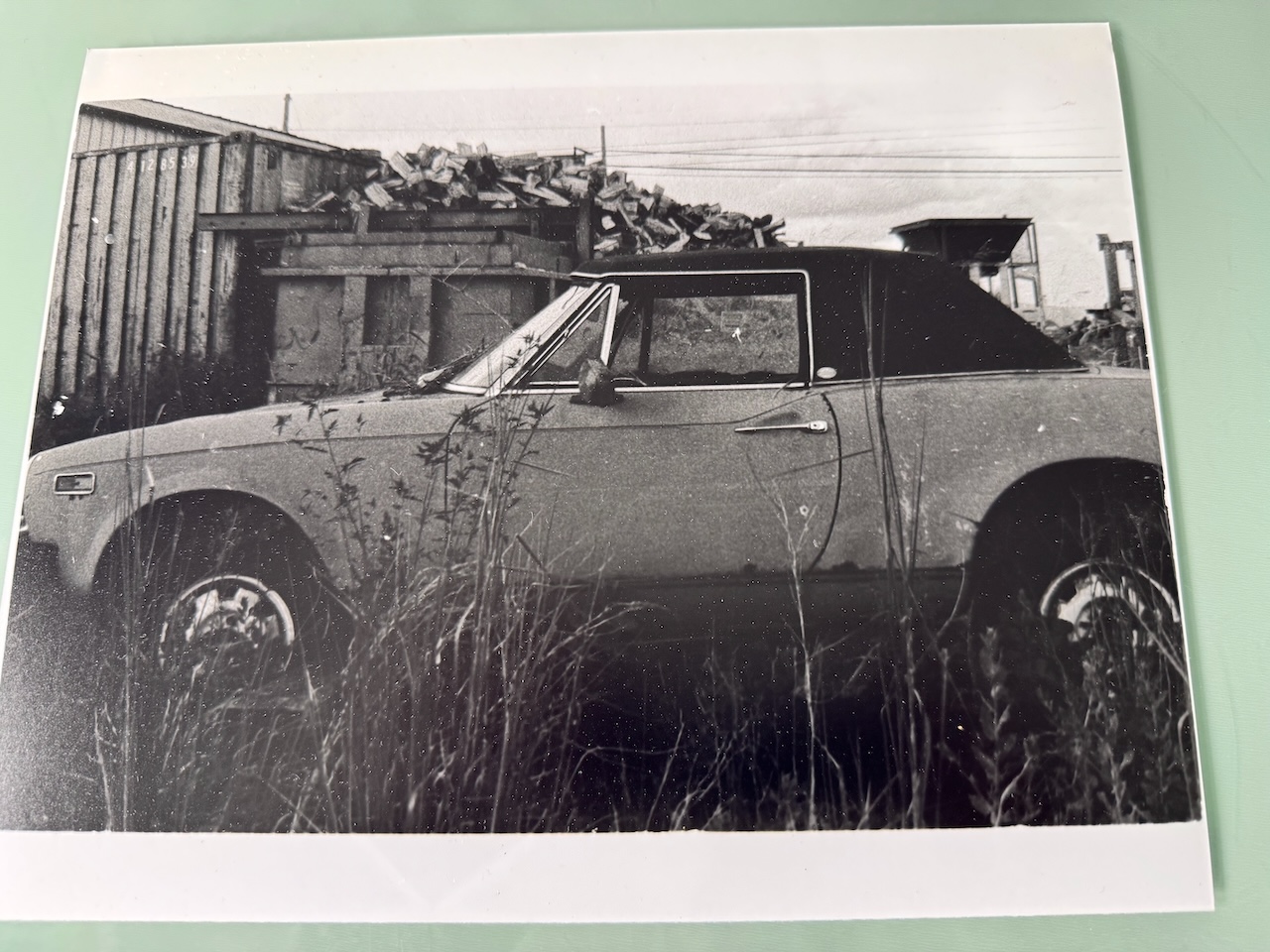
But eventually I got it right (trial, plenty of error and persistence) and below I’ve shown a few of those prints from my first foray into printing, the first showing the test prints where I tested my exposure times in strips across the photo paper, and then my first real 5 x 7 inch image, followed by my first 10 x 8 inch larger image. I’m sure the exposure and contrast on these isn’t quite right, and the right hand pillar on the first print betrays some image exposure and printing errors. But they’re my first prints and they are already on display in my study. I can’t wait to print more and explore the creative side of being able to print your own pictures.
But enthusiasm for darkroom work doesn’t solve the practical problem of daily practice.
Everyone tells you that if you want to get better at photography then you have to practice as much as you possibly can, at least daily. There’s an obvious downside to this if you shoot analogue. I would very quickly need to remortgage my house if I decided to shoot loads of images every day on film. And that is where digital photography has a real advantage: the cost, alongside the fact that you can look at what you’ve captured without having to go through the whole chemical development process.
So I’ve taken to taking out my digital camera when I’m just out for the “practice” rather than going out with a specific event, place or theme in mind. That’s how I found myself wandering around the Camden area just up from where I work one evening after work. It was one of those beautiful late summer-early autumn evenings that we’ve had plenty of recently where the temperature is really pleasant and the sky clear and bright. On this evening I happened to be out around an hour or so before sunset and the bright evening sun was bathing the gritty urban landscapes north of Kings Cross in beautiful evening sunlight.
I found myself cursing that I didn’t have my film camera with me because it really was a perfect evening for photography. But then I thought I’d go with it and so I stuck my trusty Canon DSLR into monochrome mode, and stuck an orange lens filter on and went off to explore.
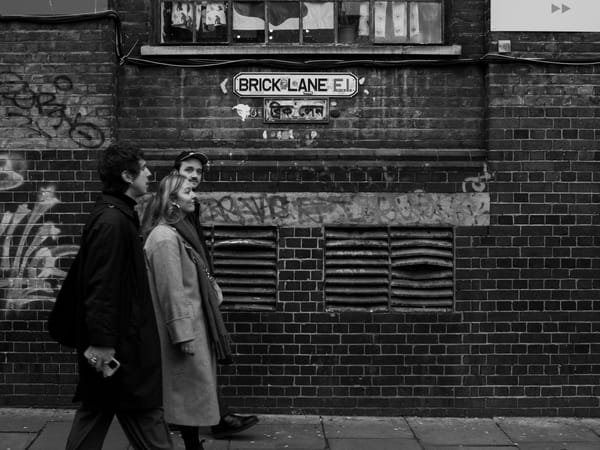
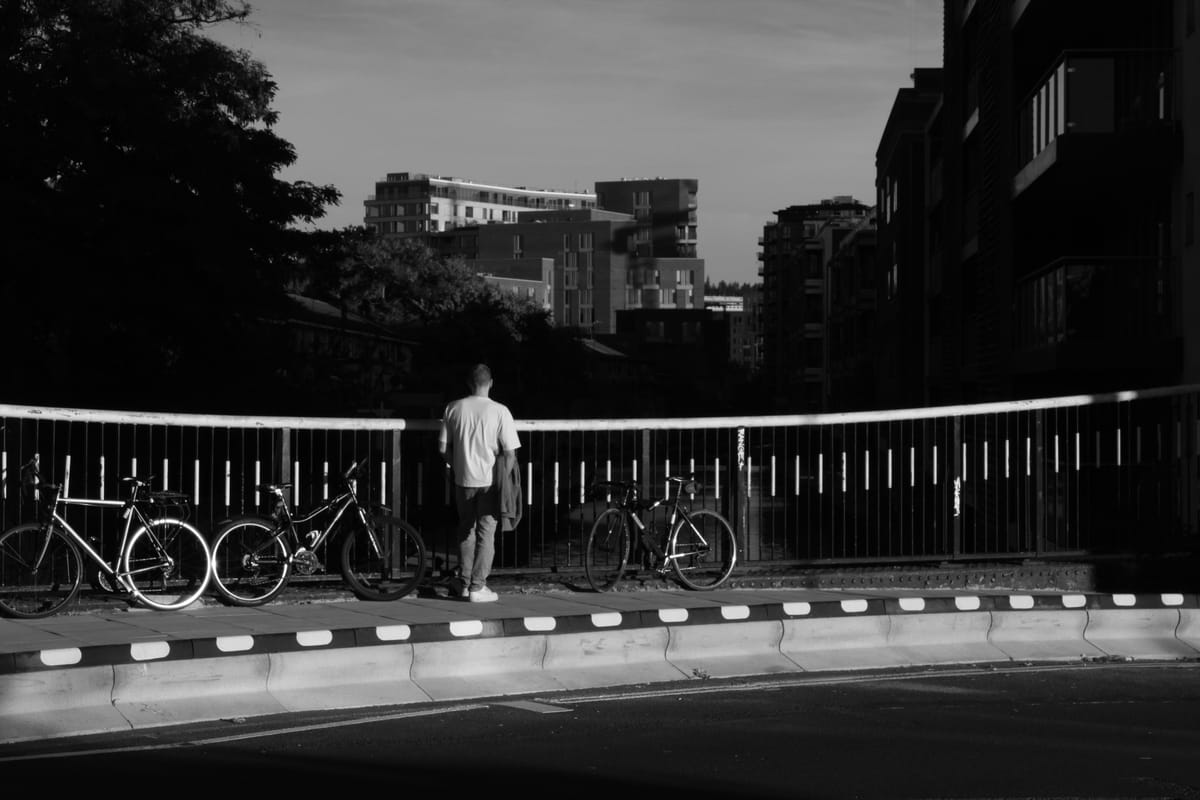
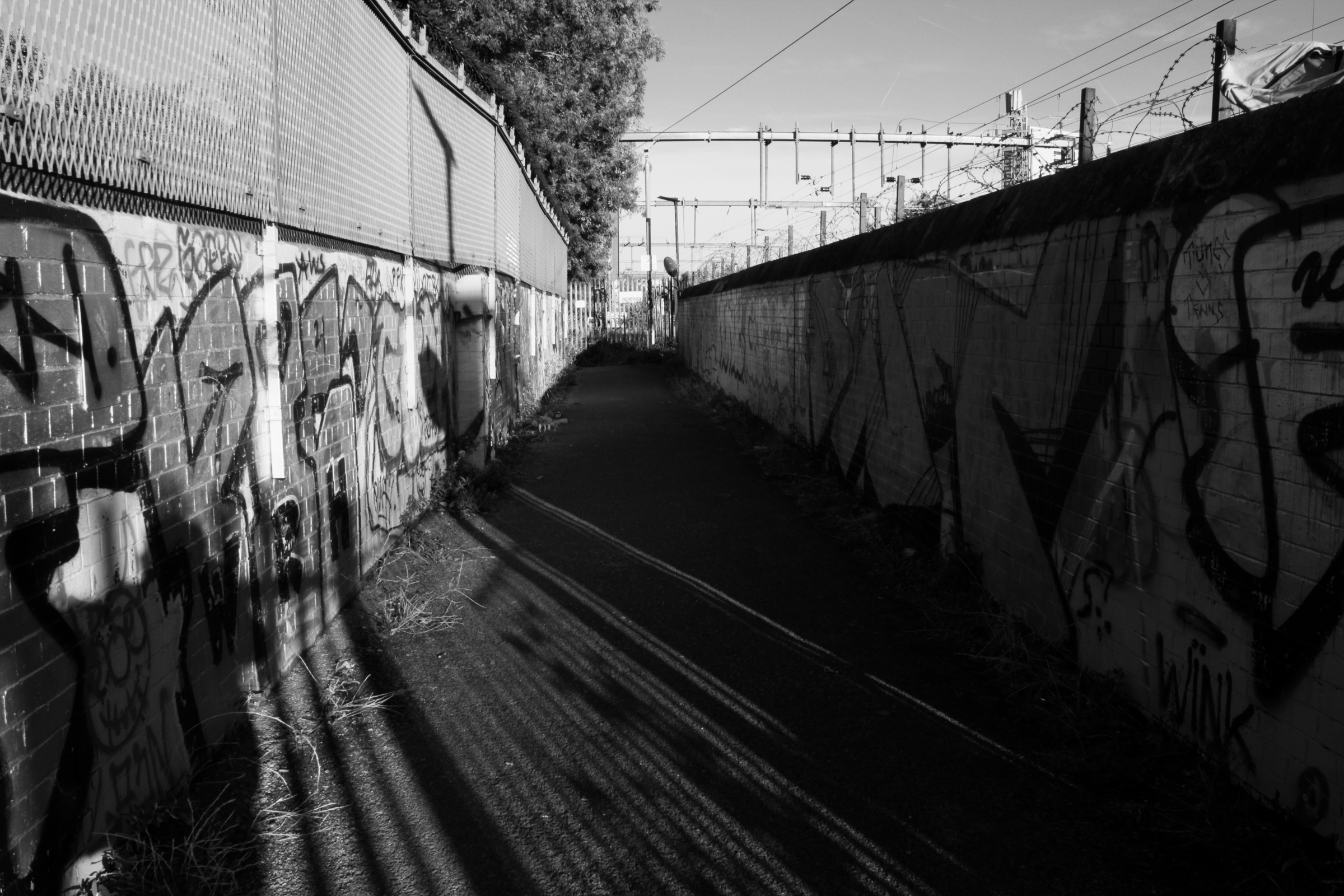
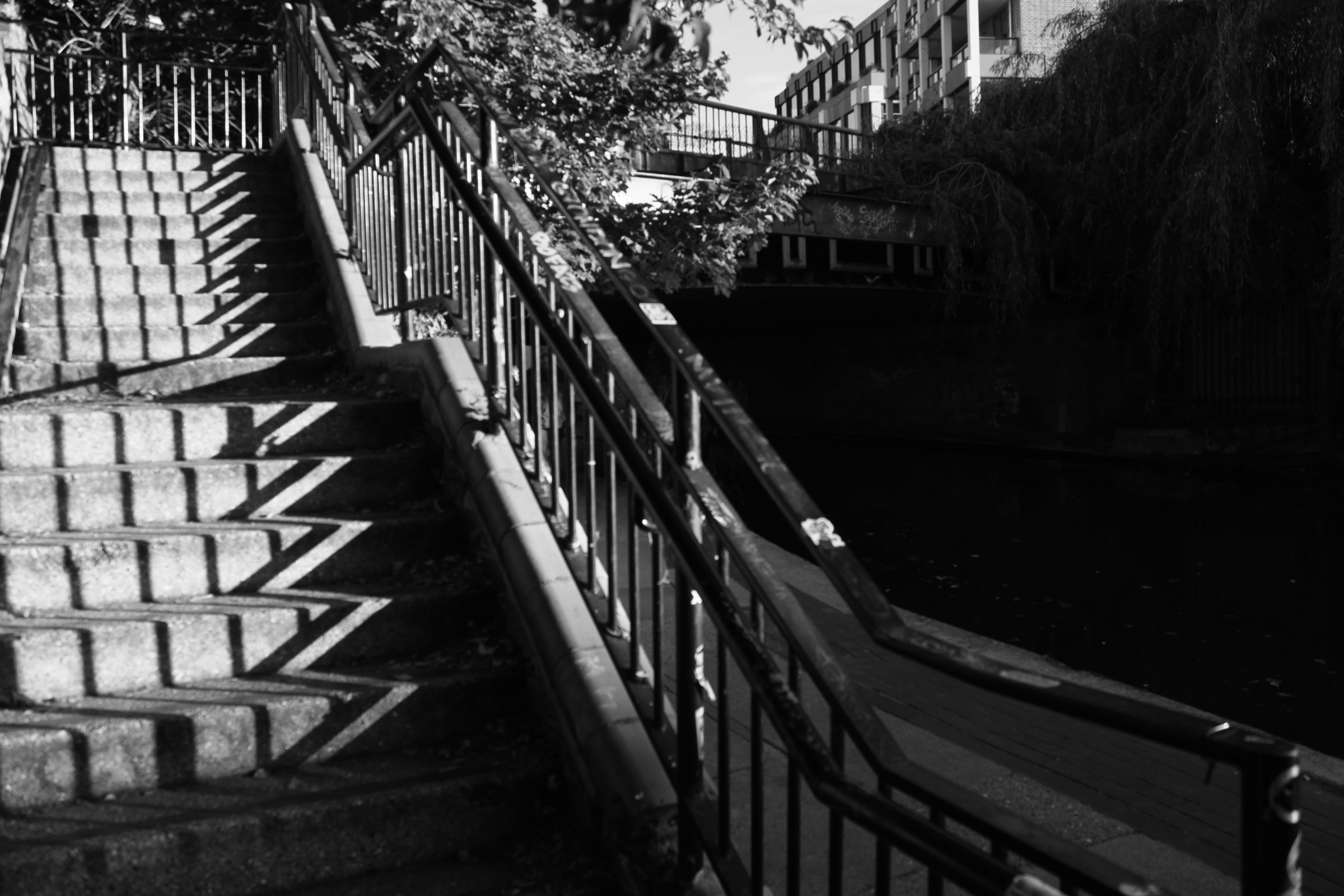
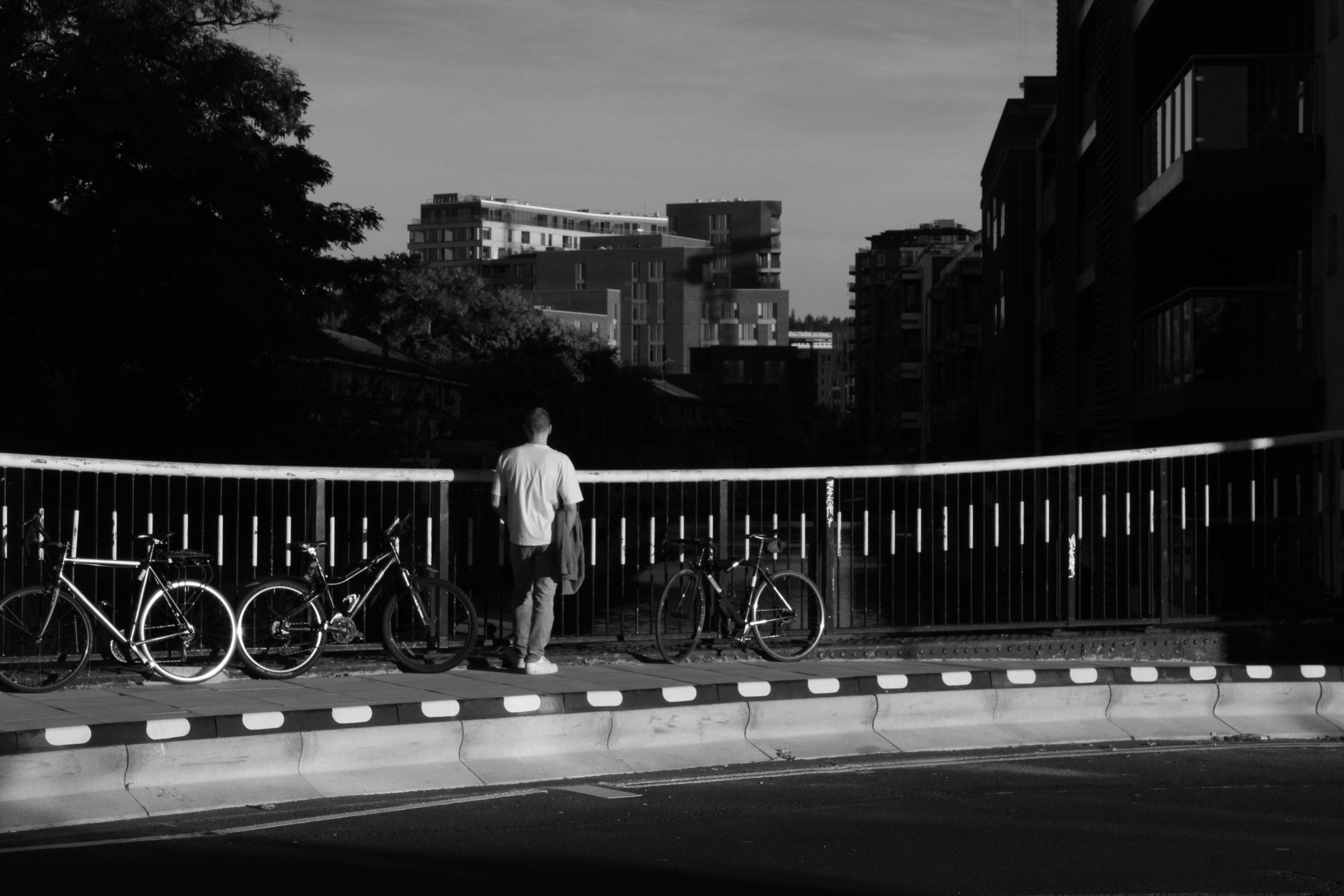
I’ve shared some of the images here that give a sense of the light that evening. Contrary to my own expectations, I really like the way the sensor has captured the long and elegant shadows of the early evening sunshine. There’s a preciseness and sharp contrast to the shadows, lines and light patterns that I can’t help thinking might have been slightly lost if I’d been shooting on film. The pictures of the railway pass in particular make full use of the low angle of the sun, and I really like the way the shadows interplay with the geometry of the stairs in the canal-side shot. They’re clean and technically controlled images, though they lack a real subject.
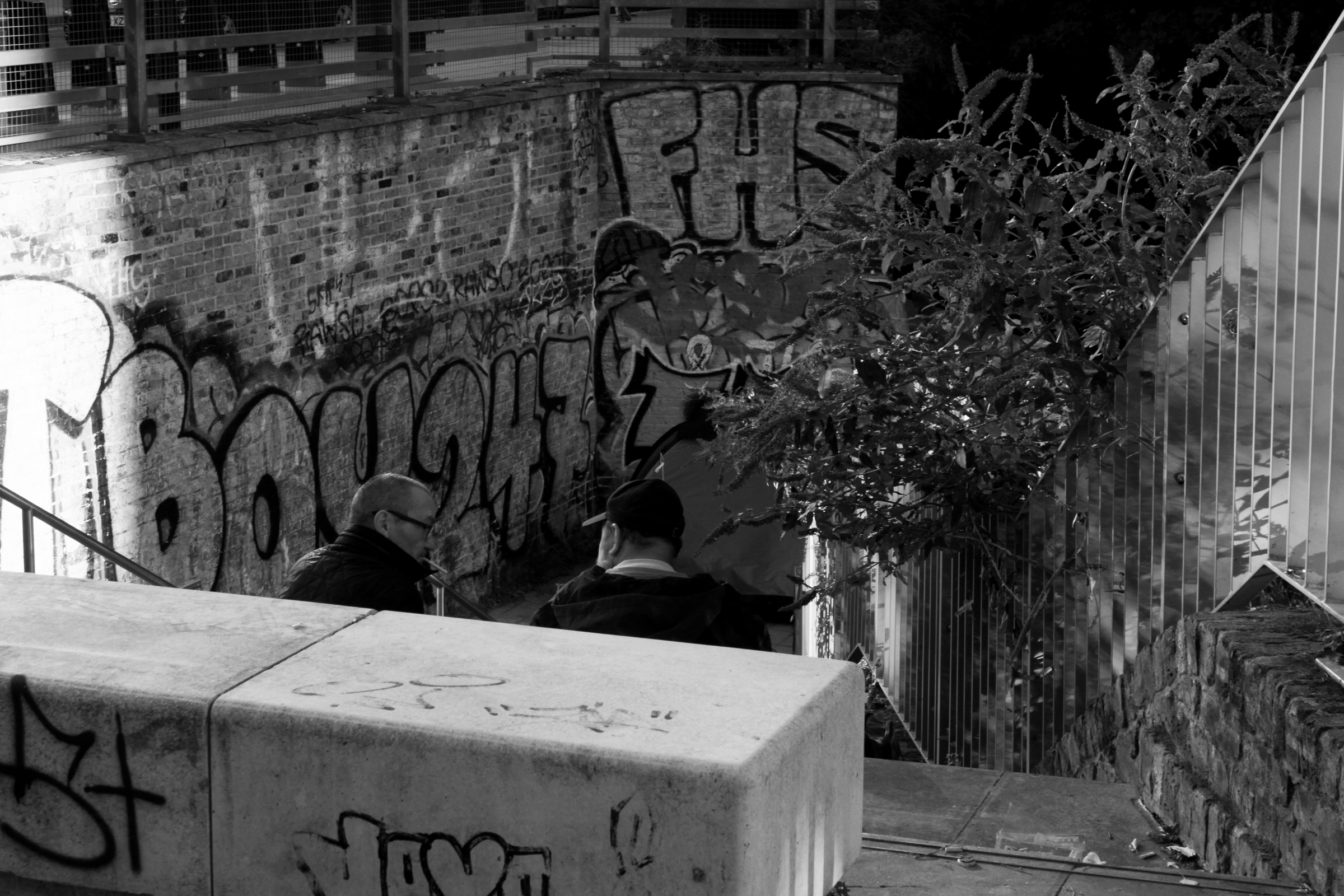
The photo of the two men sat talking in the evening sunshine, and the solitary guy on the bridge are my strongest images here and successfully combine the light and shadow on offer that evening, with an interesting human element.
The added bonus of course was that I was able to plug my camera into my MacBook that evening and look at the pictures I’d taken immediately - ideal for reflecting in the moment with the experience of being out with the camera still fresh in your mind; a perfect tool for learning and growing as photographer.
And my conclusion after these two experiences was that I love being able to develop my own film and print my own pictures - it’s magical. Yes, I prefer the tactile experience of prints, but I also love the instant feedback of digital and the immediate opportunities it gives for learning, post-processing and sharing. Both have their merits, both have their flaws.
My learning here is that the medium is not always as important as I believed. Photography is about what the photographer sees in that moment and captures, and then how the viewer connects with and interprets that image afterwards. The medium is not as important in that dynamic as we sometimes think. And I know that I need to get better at thinking about what it is I’m trying to say in my pictures, rather than just trying to take nice, technically competent pictures. That’s less about the medium, and more about me.
So from now on I’m not an analogue photographer, neither am I a digital photographer. I’m a convert to a third way, I’m sitting on the fence, I’m just a photographer.