Persistence and resilience
Sometimes life throws us little coincidences that feel almost designed to teach us something, or to help us learn a bit more about ourselves.
Earlier in the week I read a fantastic piece on Substack by . Jared talks at length about the persistence and perseverance of Henri Cartier-Bresson. HCB - probably the most revered photographer of the twentieth century, was first and foremost someone who worked tirelessly at his craft. He knew that true craft comes not from quick wins and shortcuts, but by putting in the hard yards, being patient, trusting the process. HCB didn’t seek recognition. He didn’t get lucky by being in the right place at the right time to take a picture. He created his own luck by being out there day after day relentlessly observing the world, understanding people, predicting how they might behave in any given moment. In short, his shear persistence made him into the great that we know him as today.
I also listened to an interview with the author James Patterson on Arthur Brooks’ “Office Hours” podcast. Brooks - whose work on purpose and fulfilment I really admire (see his book From Strength to Strength) —asked Patterson about how he sustains creativity. Brook’s interview with James Patterson was illuminating. Patterson holds the world record for the most number of New York Times bestsellers and the conversation was about how creativity has become part of his life. Two points stood out for me from the conversation. The first was that Patterson writes every day without fail. For him writing is not a means to an end, it is the end itself. He writes for what it gives to him and means to him in the here and now, not for the recognition that it might lead to in the future. The second point that really resonated in this interview was his contention that excellence is the hard work that comes after the inspiration. Inspiration can strike all of us. But what differentiates someone like Patterson from others is the hard work that he puts in to turn that inspiration into excellence. He speaks of the relentless re-drafting of sentences to get them just right, even though the idea or inspiration behind them was captured in his first draft.
HCB and Patterson both teach us that true craft isn’t luck, it isn’t being in the right place at the right time. True craft is developed through relentless persistence, through focussing on the here and now and being the best you can be in the present, rather than living for other’s recognition.
Of course, lessons like this are easier heard than they are implemented.
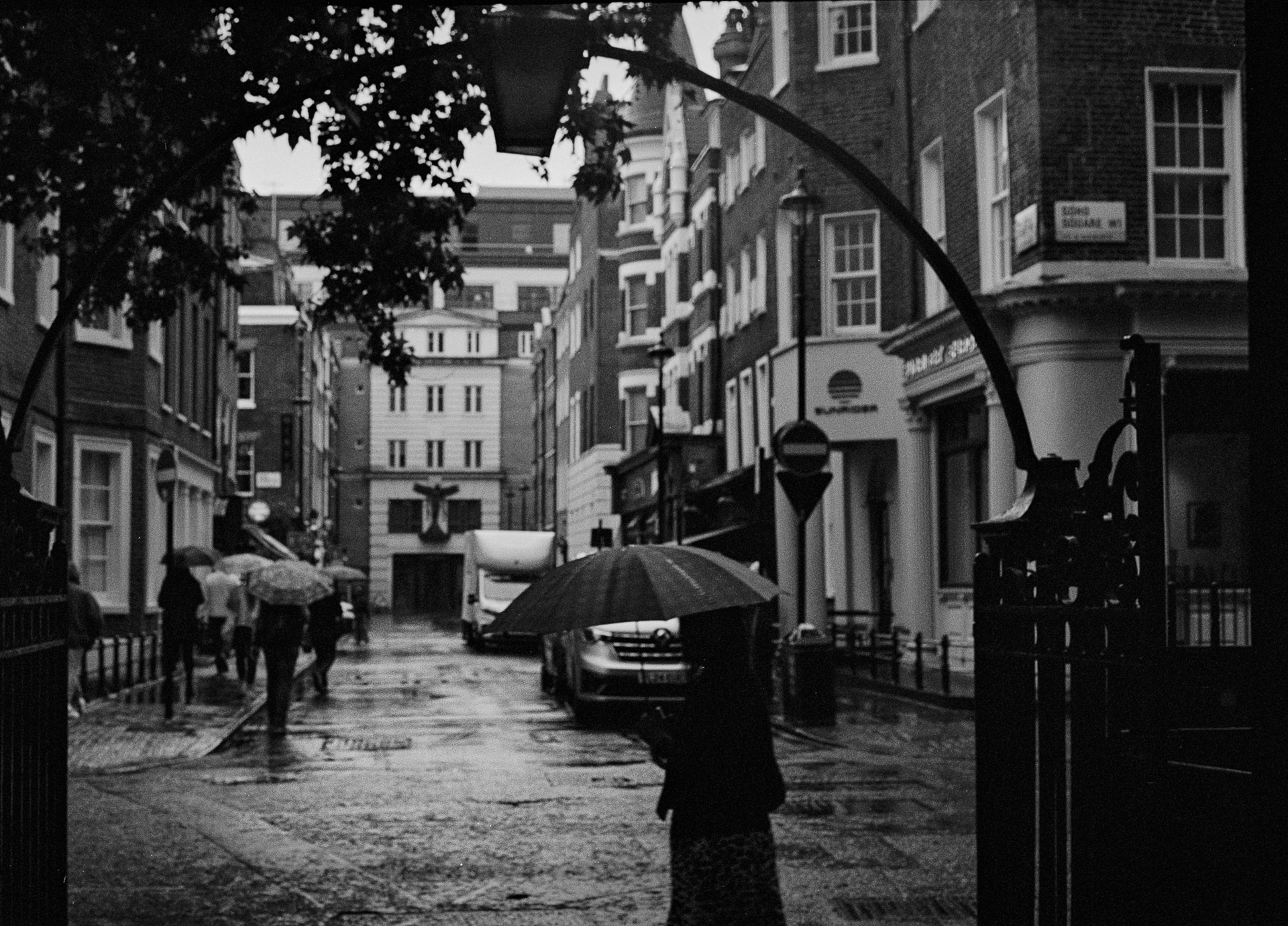
And so it was that I found myself in this same week at the meeting of my local camera club. This is a new venture for me over the past few months and so far I’ve enjoyed these meetings with other local photographers. This week was the member print competition into which I’d submitted two entries, emboldened by the positive endorsement I’d received from the judge when reviewing my previous entry for the projected digital image competition a month or so ago.
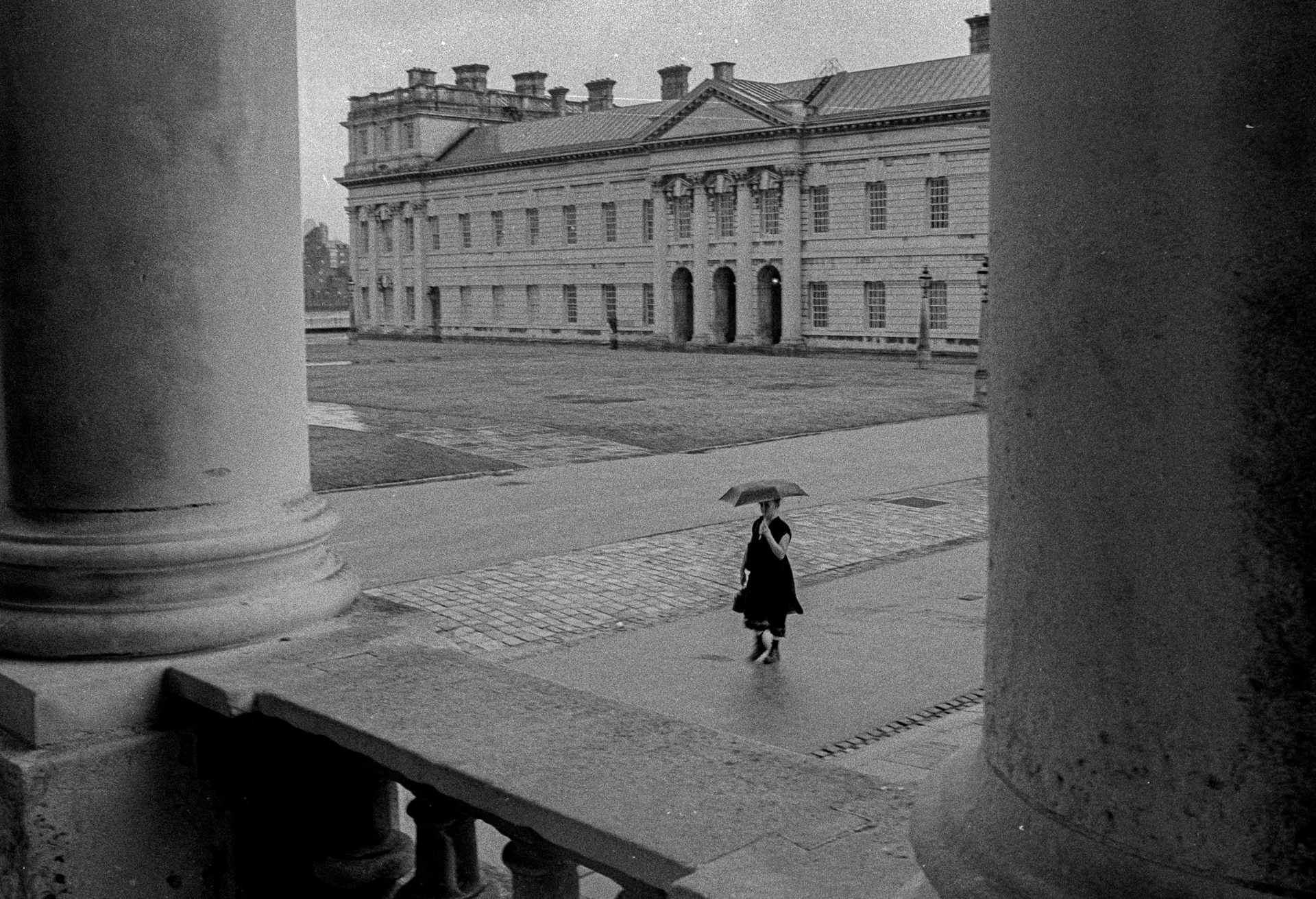
If I’m being entirely honest I wasn’t that happy with one of my entries into this week’s competition. I think the photograph of a local oast house, juxtaposed against quarry machinery, has potential, but I was not happy with the way it had come out in my darkroom printing process. The tones weren’t quite right and the picture lacked impact, but I submitted it anyway. I was more hopeful for my second entry where I was pleased in how I’d been able to capture a solitary woman dressed in black, framed by the colonnades and courtyard of the Royal Naval College in Greenwich.
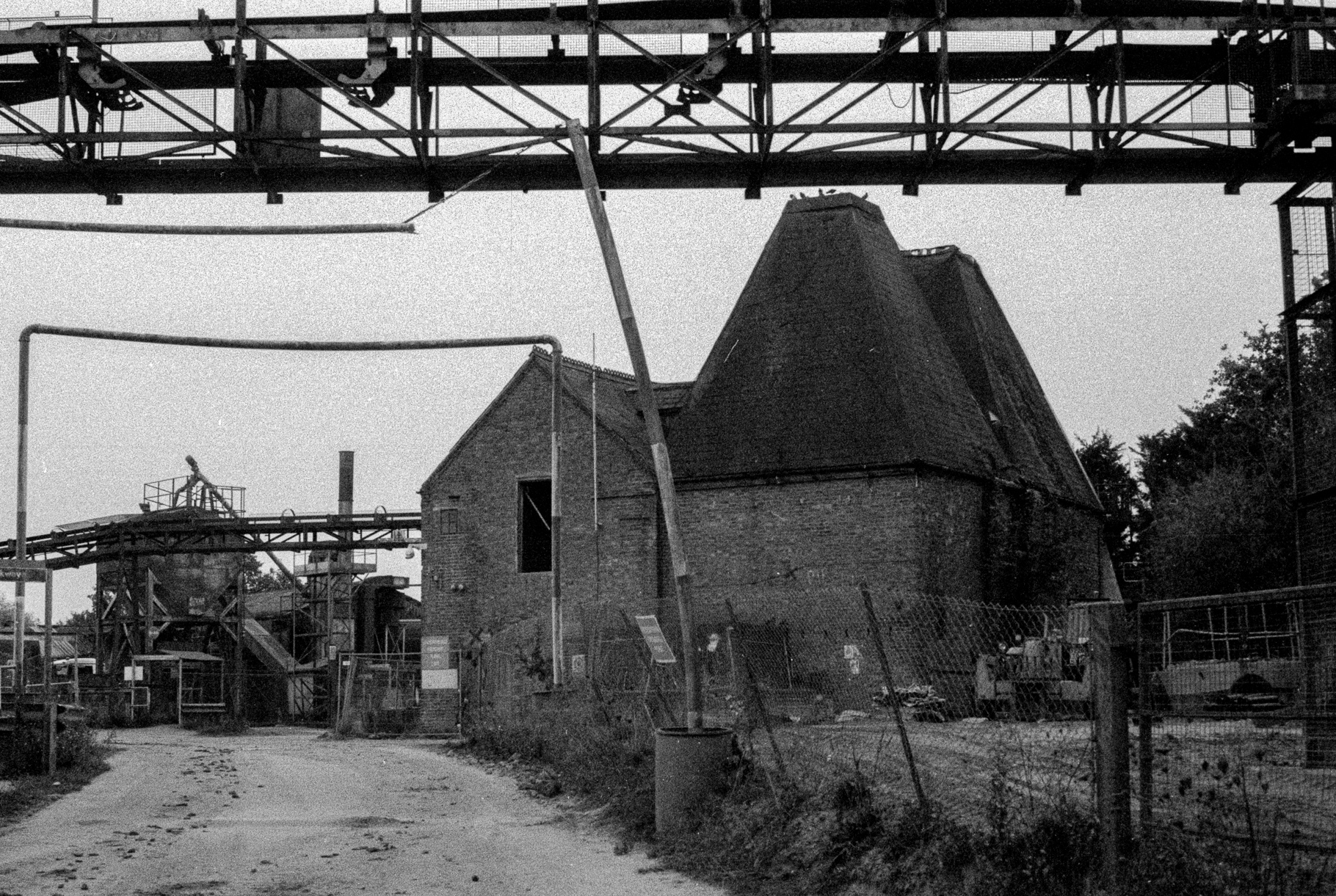
But the moment I walked into the room and saw the other pictures that had been printed m confidence evaporated. There were some wonderful pictures on display, wonderfully captured and beautifully printed. Sure enough the judge’s feedback was pretty damning on my oast house composition. The lighting was too flat, the image lacked emotional resonance and a core subject. My lady in black faired slightly better but the judge still felt the lighting was flat and that the framing which I’d been keen to use as part of my composition, actually felt like a barrier between the viewer and the subject.
Now, anybody who has been to a camera club session like this will know that judge’s comments are notoriously variable, can be very subjective, and shouldn’t be taken too much to heart. But - on reflection - I do think I agree with some of his comments. In my defence, however, I don’t think I was helped by the fact that mine were probably the only prints on display that had been hand printed in a darkroom. I’m pretty sure all of the others were digitally taken, digitally manipulated, and printed with a high quality printer. I on the other hand am a total novice at darkroom printing so it is no surprise that the tone and punch of my images was probably a bit off.
But as the evening went on I found myself more and more questioning myself. Will I ever get as good as some of the photographers on display tonight? Are they just more talented than me? What if photography isn’t for me after all? Disheartened and a bit fed up, I went home with all these thoughts racing through my mind.
The next morning, still feeling a little raw, I remembered something that made me laugh at myself. I realised that in my disillusionment I’d totally ignored the lessons from HCB and James Patterson that I had read about and listened to earlier in the week. Would they have given up after just one slightly disheartening moment? Would they have let one person’s feedback prevent them from getting back in the saddle? Would they have compared themselves to others and allowed their heads to drop at their apparent inferiority?
Of course the answer is no. Because both of these greats weren’t motivated by what others thought. They weren’t motivated by recognition or comparison. They certainly weren’t motivated by followers or likes. They were motivated by doing what they loved to do. They knew that the only thing that matters is staying true to what is important to them, and pursuing that with relentless persistence, perseverance and patience.
Sometimes life throws up these little coincidences, my own resilience challenged just at the point I’d learnt about what it takes to achieve true craft. It’s hard in our dopamine-soaked world of personal branding, social media algorithms and viral posts to remember to heed the lessons of HCB, Patterson and countless others like them. We seek instant gratification, recognition and reward because that’s what the world tells us important. But I need to keep reminding myself that none of that actually matters. What matters is that I enjoy photography for how it makes me feel, and I share my pictures because I want others to experience what I see and what I interpret when I look through the viewfinder. And I need to remind myself that there are no shortcuts to getting good at my craft, there is no luck, only the long, steady work of showing up.
Thanks for reading. Would love to hear from you if any of this piece has resonated with you and your photography or artistic journey.