Pros and cons
A tale of one new camera and one ruined roll
Every so often, film reminds you exactly why you put up with all its quirks. This week, it also reminded me why I sometimes want to scream with frustration.
Those of you who have read my previous posts will know that I’m very much committed to the film medium. I even named this substack Frame to Grain to signal my creative commitment to making compositions and frames which could be emphasised by the natural grain that you only get when using film as your medium as opposed to the digital sensor. But you will also know that I’ve never been dogmatic about my use of film and absolutely recognise that there is time and space in my practice for the use of a digital camera.
And so it was with much excitement that I decided that the time was right to upgrade my digital camera. Up to this point I have used a fairly old Canon EOS 1200D as my digital body of choice. It’s a starter, mass consumer-focused SLR body, but perfectly capable with the reliability, features and value for money that we’ve all come to expect from Canon. But as I’ve got more serious about my photography I have felt I needed something a little more professional.
The secondhand market is awash with choice for any budget and with my modest budget in mind I excitedly ordered a Fujifilm XT-2, largely because of the legendary reputation Fujis have for their colour rendition, but also because it would give me access to Fuji’s film simulation modes which I’d read good things about, and also because Fuji cameras have physical dials that can use to set exposure etc., so it would still feel like film photography in some senses. A perfect halfway house I thought.
Said Fuji arrived, and like a kid with a new toy I tore off the packaging, twirled it admiringly in my hand, congratulated myself smuggly, and fired it up. Now I would consider myself fairly tech-savvy, and I’m certainly no luddite, but I just couldn’t get on with the dials and the menus. It all seemed counterintuitive compared to my trusty old Canon; too many options, countless configurations. As a much smaller body than my Canon, I wanted to use the Fuji essentially as a digital point and shoot that I could carry around with me all the time. But no matter how much I tried, I couldn’t get to grips with it. Give it some time and patience I told myself - it will be fine, it’s just a learning curve and once I force myself up that curve it will be fine. I convinced myself that this old dog was still capable of learning new tricks.
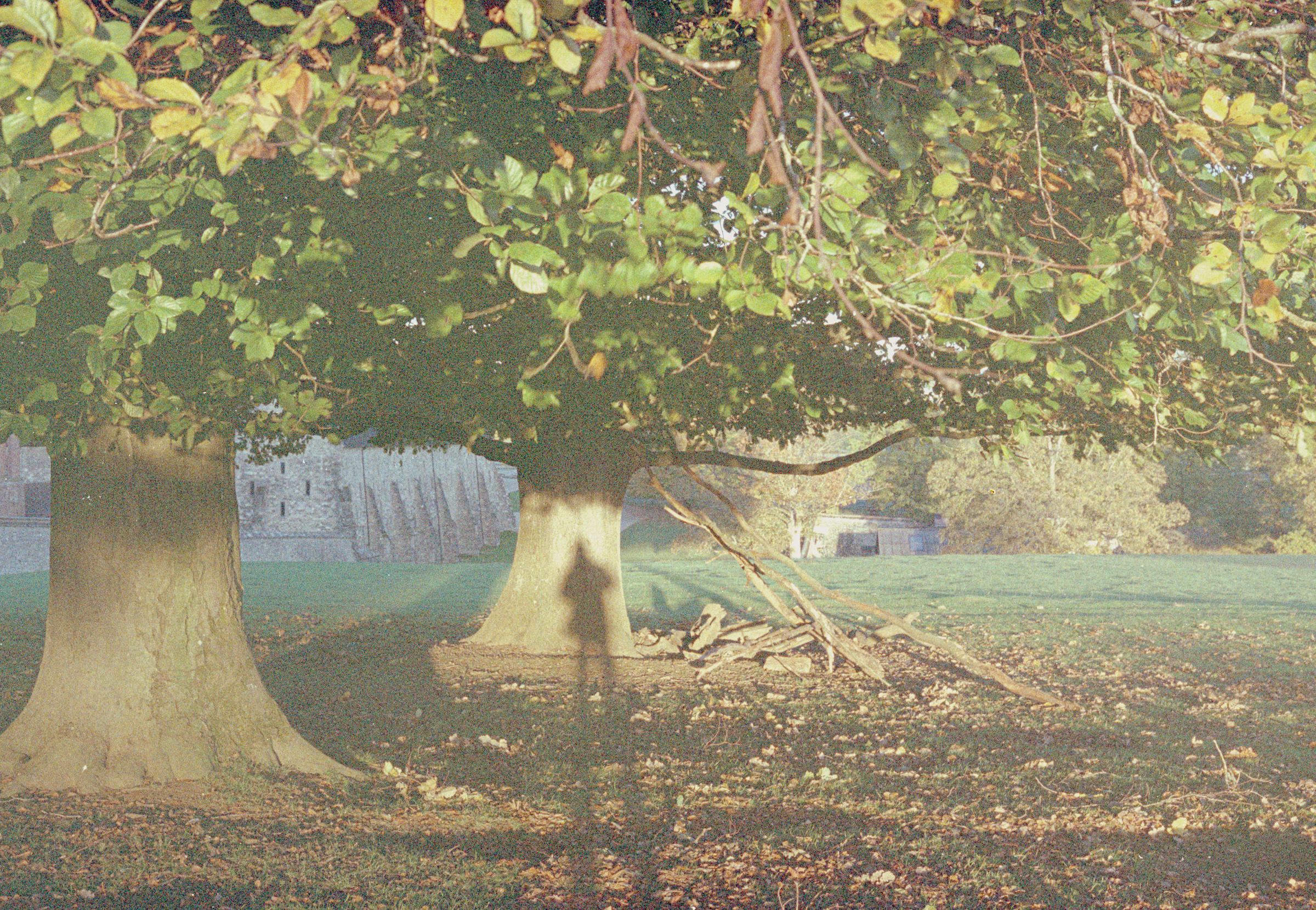
But then something else happened that reaffirmed to me my love of film photography. A few weeks ago I decided to go out one early autumnal Sunday morning with a long-expired roll of Fuji Superia loaded. My preference is usually to shoot street scapes and industrial architecture, but on this occasion I was out in Knole Park, Sevenoaks - just up the road from me and a beautiful deer park framed around a medieval country house. And it just so happened that the same day my new Fuji camera arrived I also received the developed negatives from that roll of Superia.
I fired up the scanner and began to review the negatives and was immediately reminded of why I like film so much. The autumnal colours of that early morning were beautifully accentuated by the colour palette of the Superia. As you can see from the images I’ve attached, the expiration of the film had only served to emphasise the grain, and warm up the tones of the leaves in the trees, and the brickwork of the local ragstone used to build the old house and its surrounding walls.
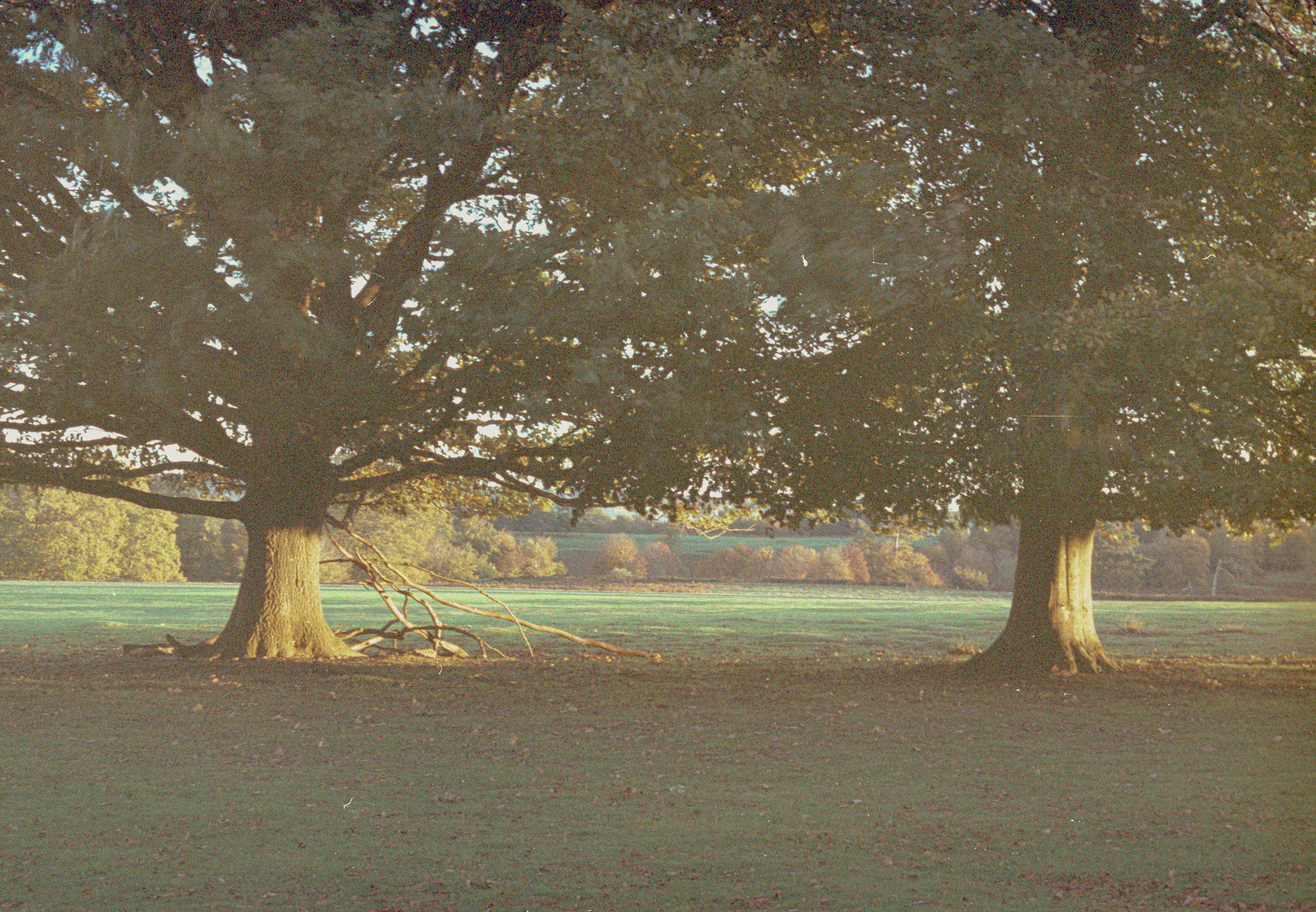
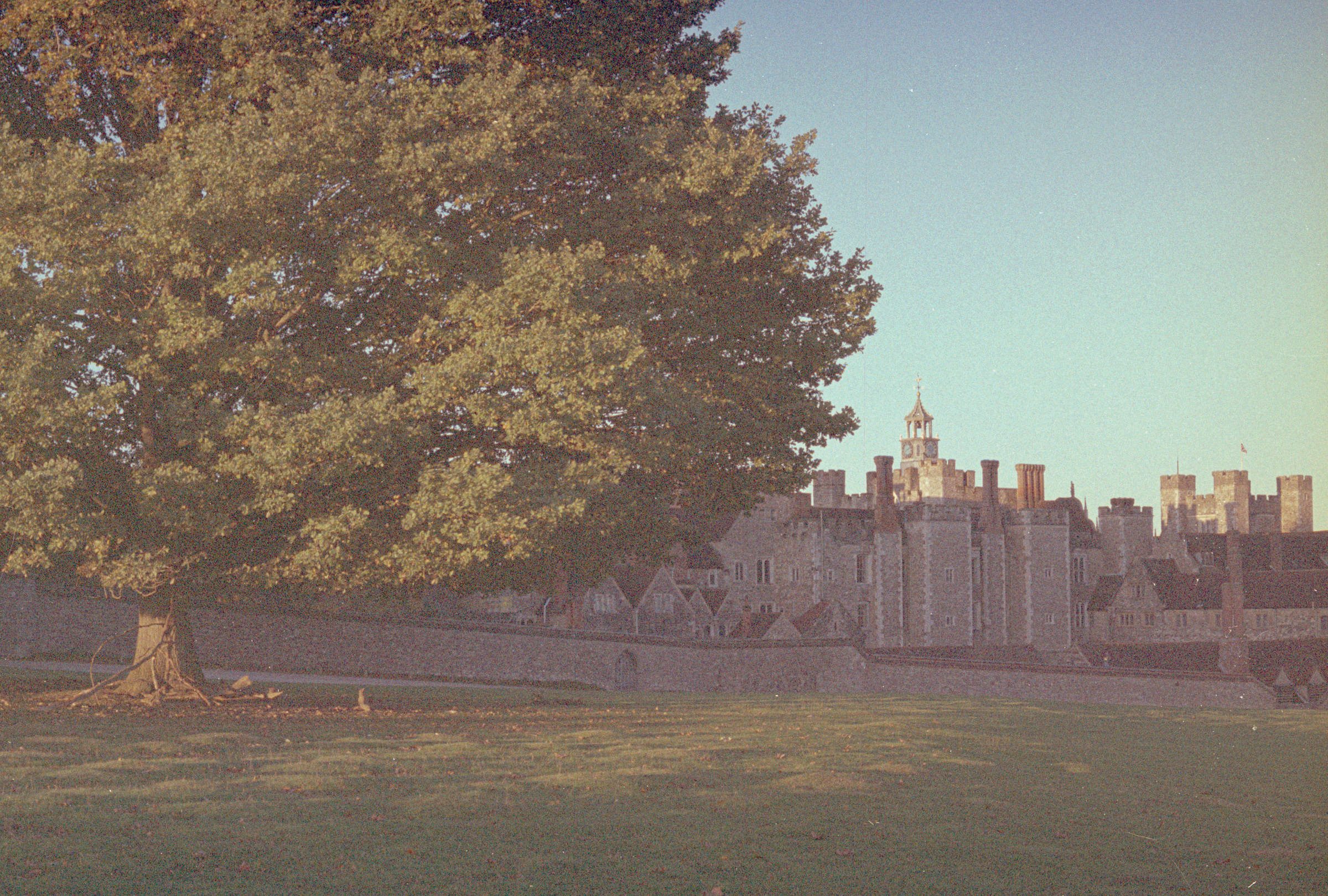
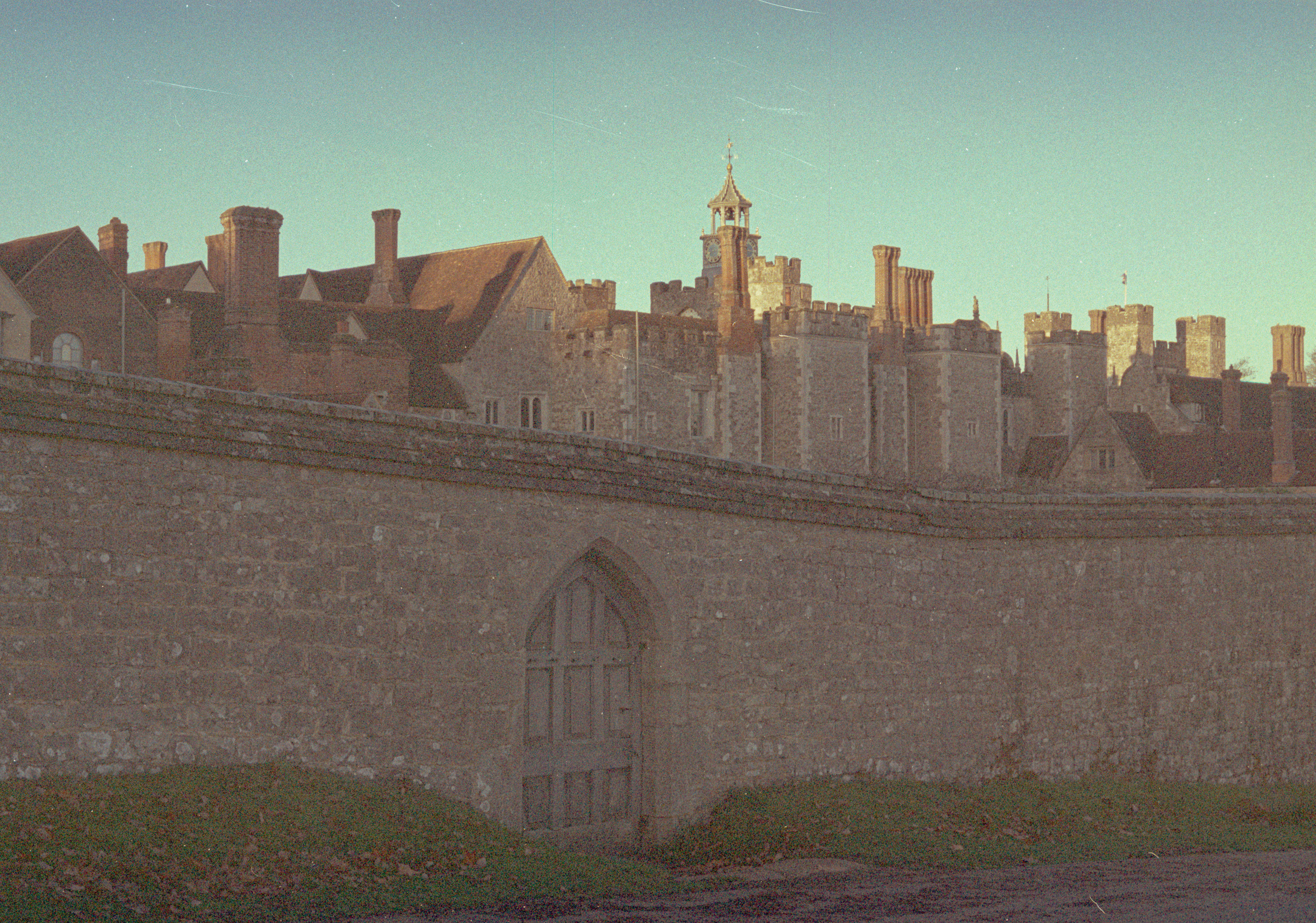
The grain might be too prominent for some tastes, but not this photographer. Maybe it’s my own silent rebellion against the digital world that infiltrates every aspect of our lives, a preference for analogue impurity and imperfectness over digital precision, the crackle and pop from the needle on my vinyl records over the faultless clarity of the music stream.
But then, a few days later, I was also given a timely reminder of the frustrations of working with 35mm film.
I develop my black and white film myself at home and up until this point have had great results. So I didn’t think twice as I loaded the Formapan 400 onto the Patterson Reel in complete darkness. Now I come to think of it I found the loading process a little more difficult than usual for some reason; the reel loading mechanism seemed a little stiffer than previously. Half an hour or so later, after bathing and rotating the reel in various magic potions, I pulled out the film and to my frustration and horror, the negatives were undeveloped and blotchy in certain places. Clearly, I had managed to load the film onto the reel incorrectly and some of the undeveloped film had stuck together in the tank, preventing the chemicals from passing across the surface of all parts of the film equally.
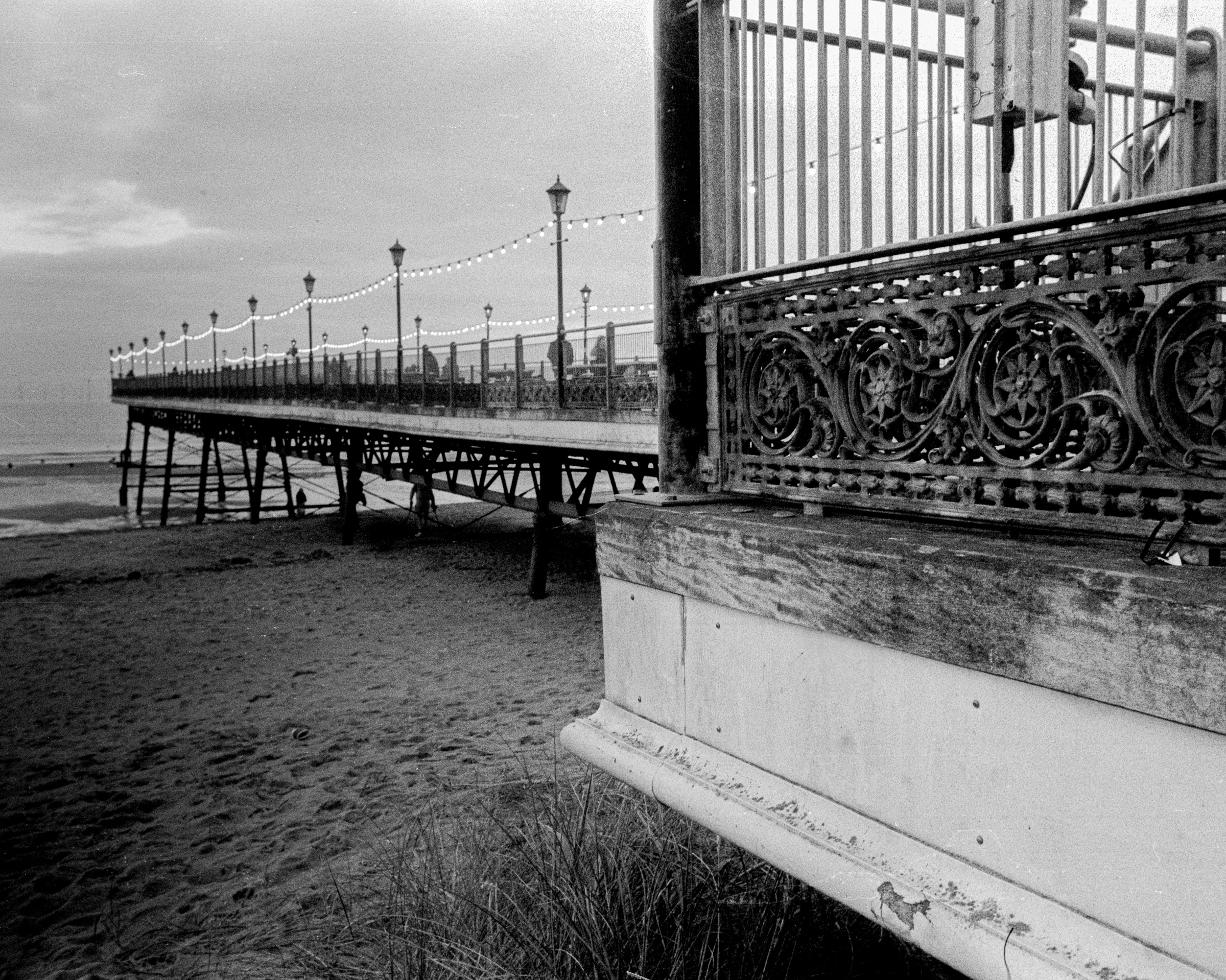
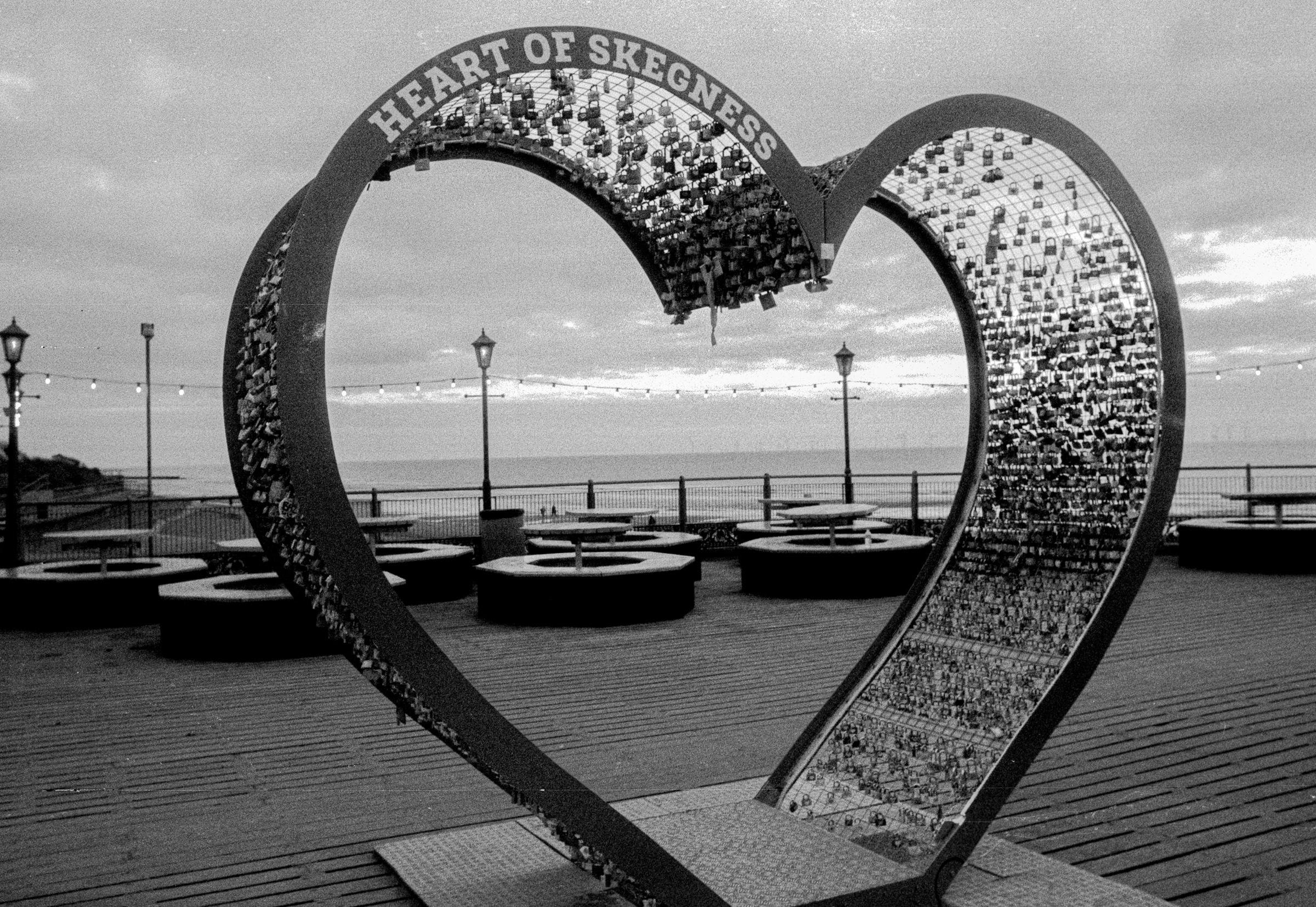
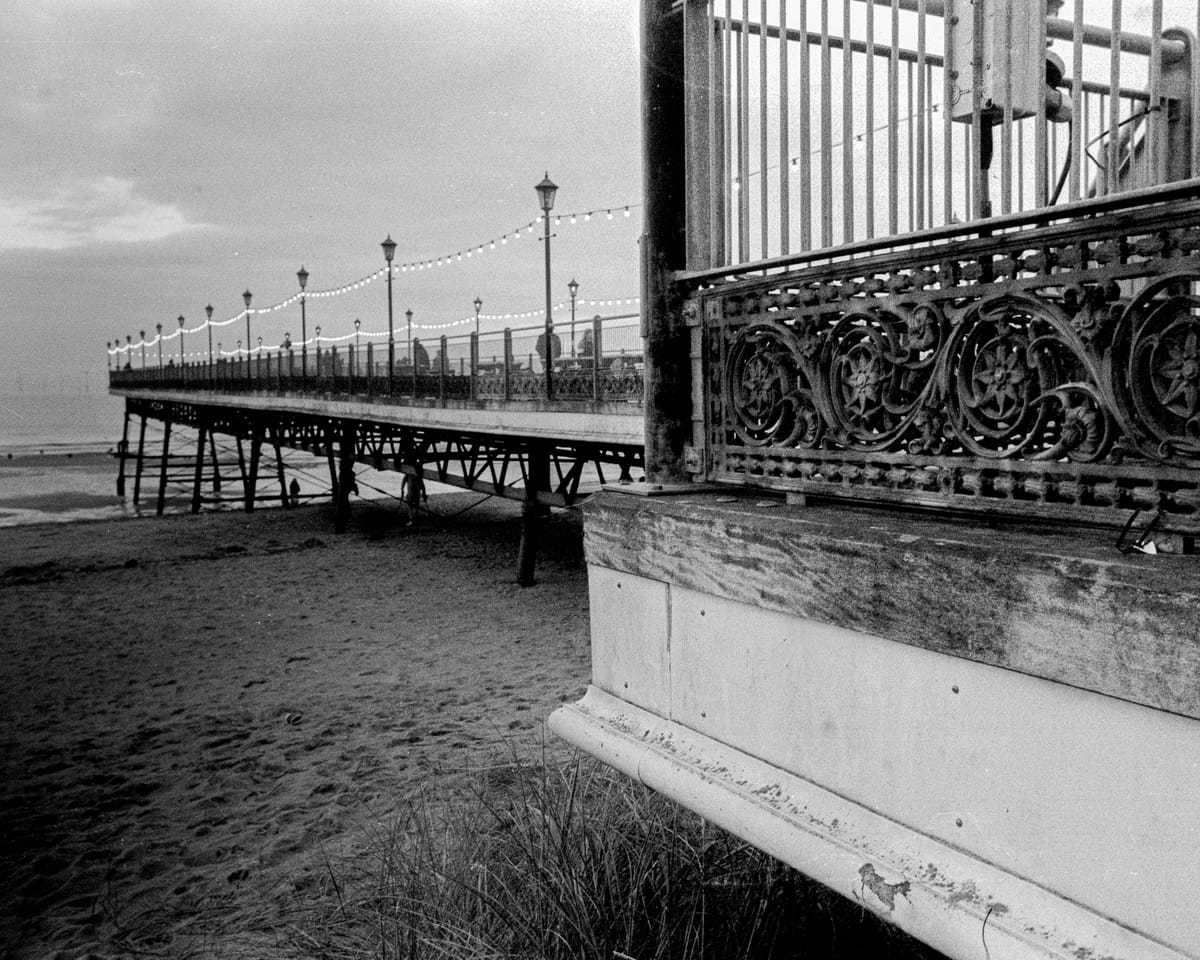
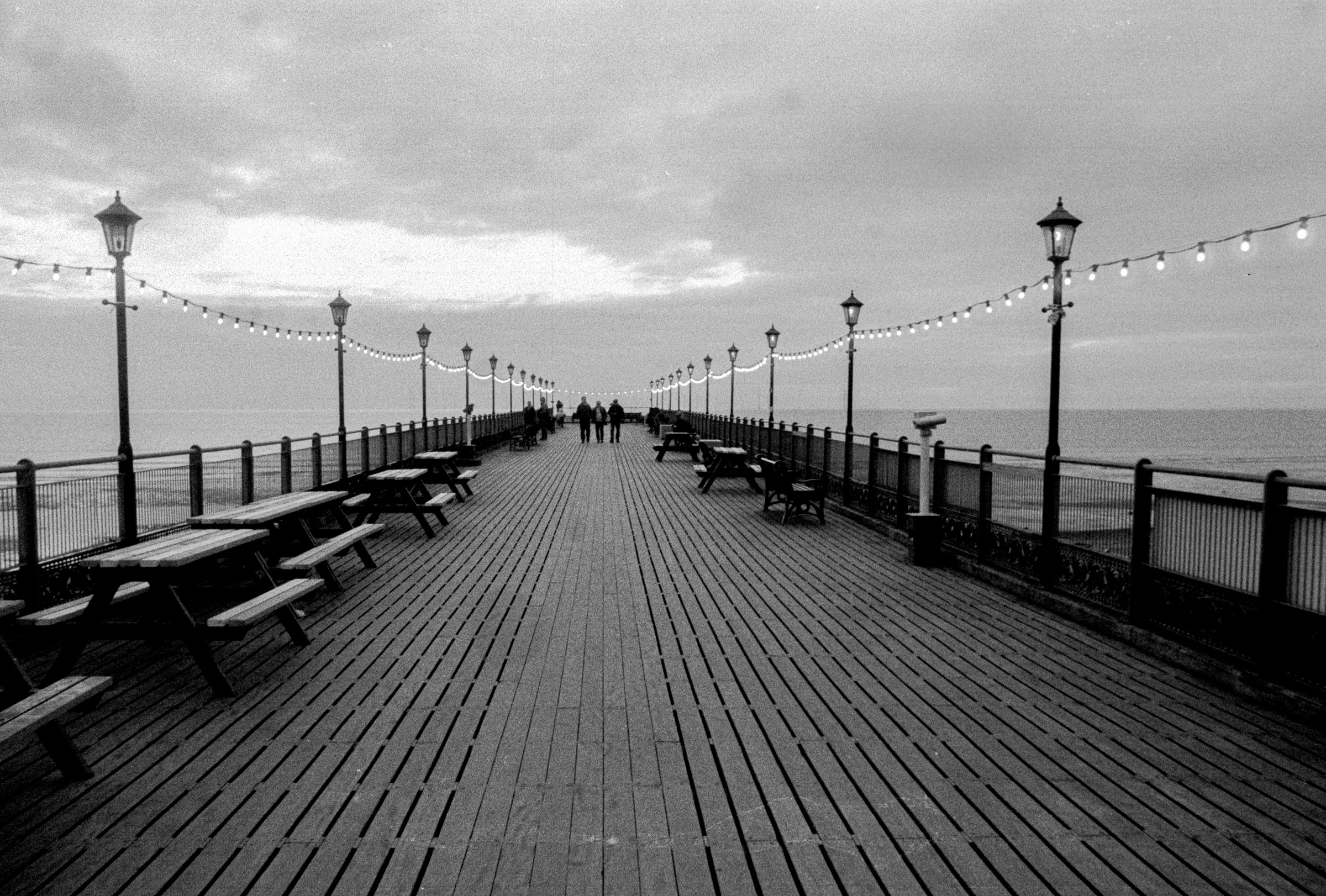
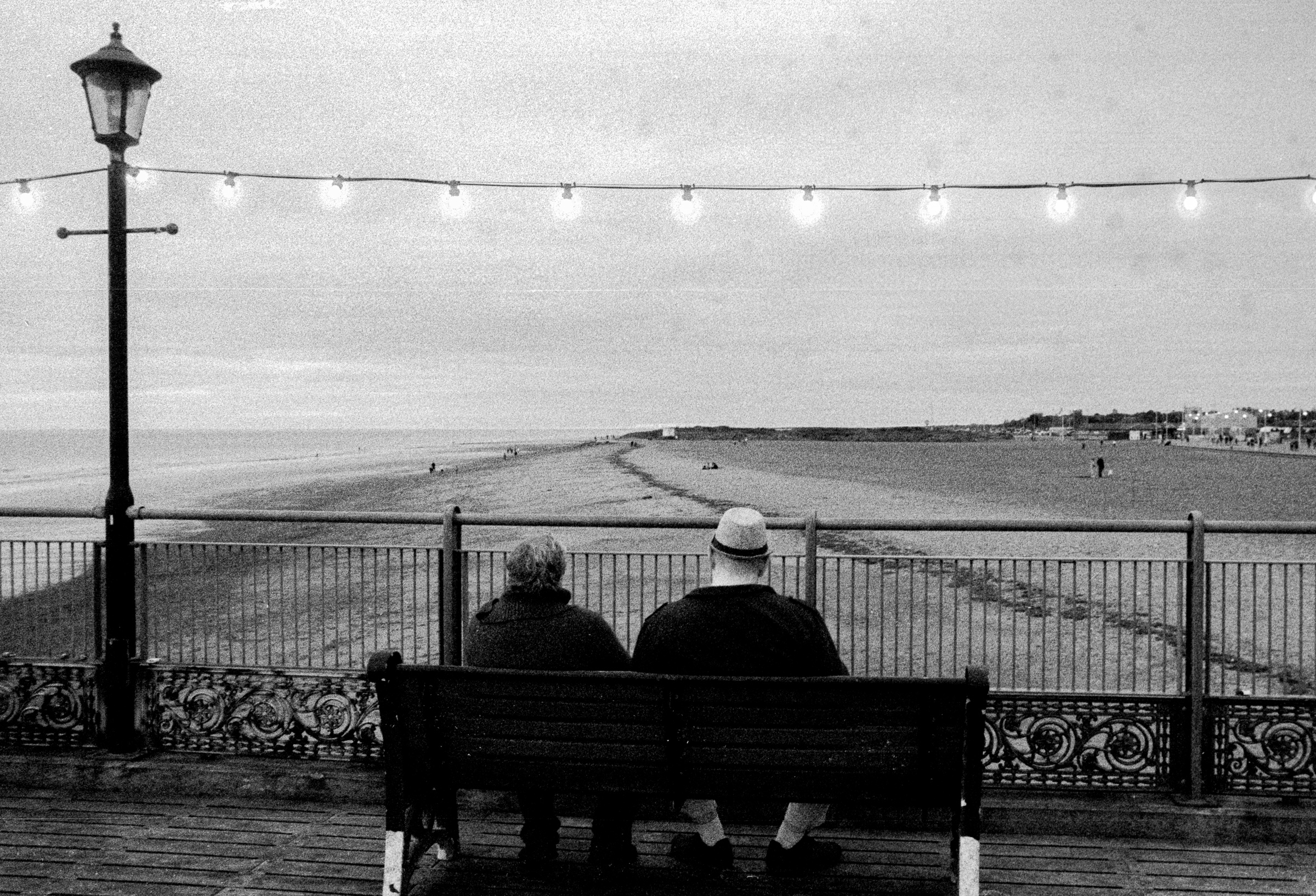
The added frustration was that I had been particularly looking forward to processing these negatives. The film was shot on a beautiful late autumn afternoon visiting Skegness on the North Sea coast. The light was just beautiful, and the contrast of the architectural straight lines of the pier with the soft hue of the beach and sea was pure photographic gold. The neon boldness of the amusement arcades and pier lighting was perfectly emphasised by the fading light of golden hour.
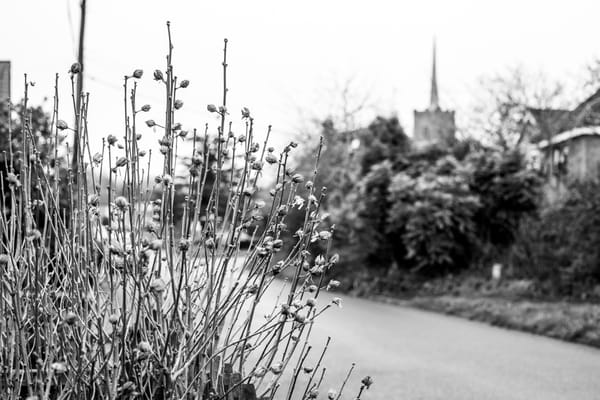
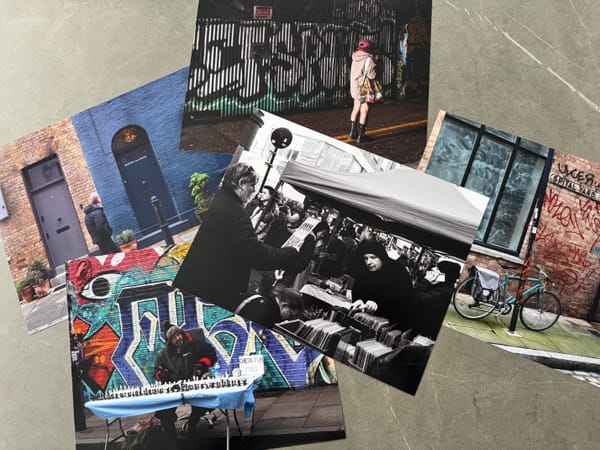
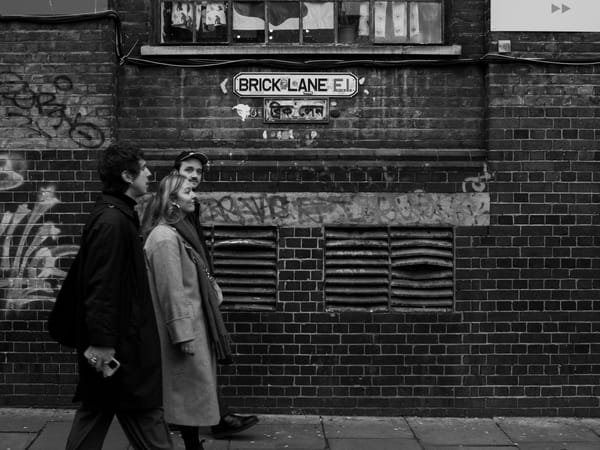
Clearly, I thought I’d bagged some bangers and couldn’t wait to get them processed, scanned and shared. Unfortunately though, it was not to be. There’s a few frames that were salvageable, but at most there are about six frames from a reel of 36 that I could save. I’ve shared a few of these and hopefully you can see why I was so disappointed to have lost of the film.
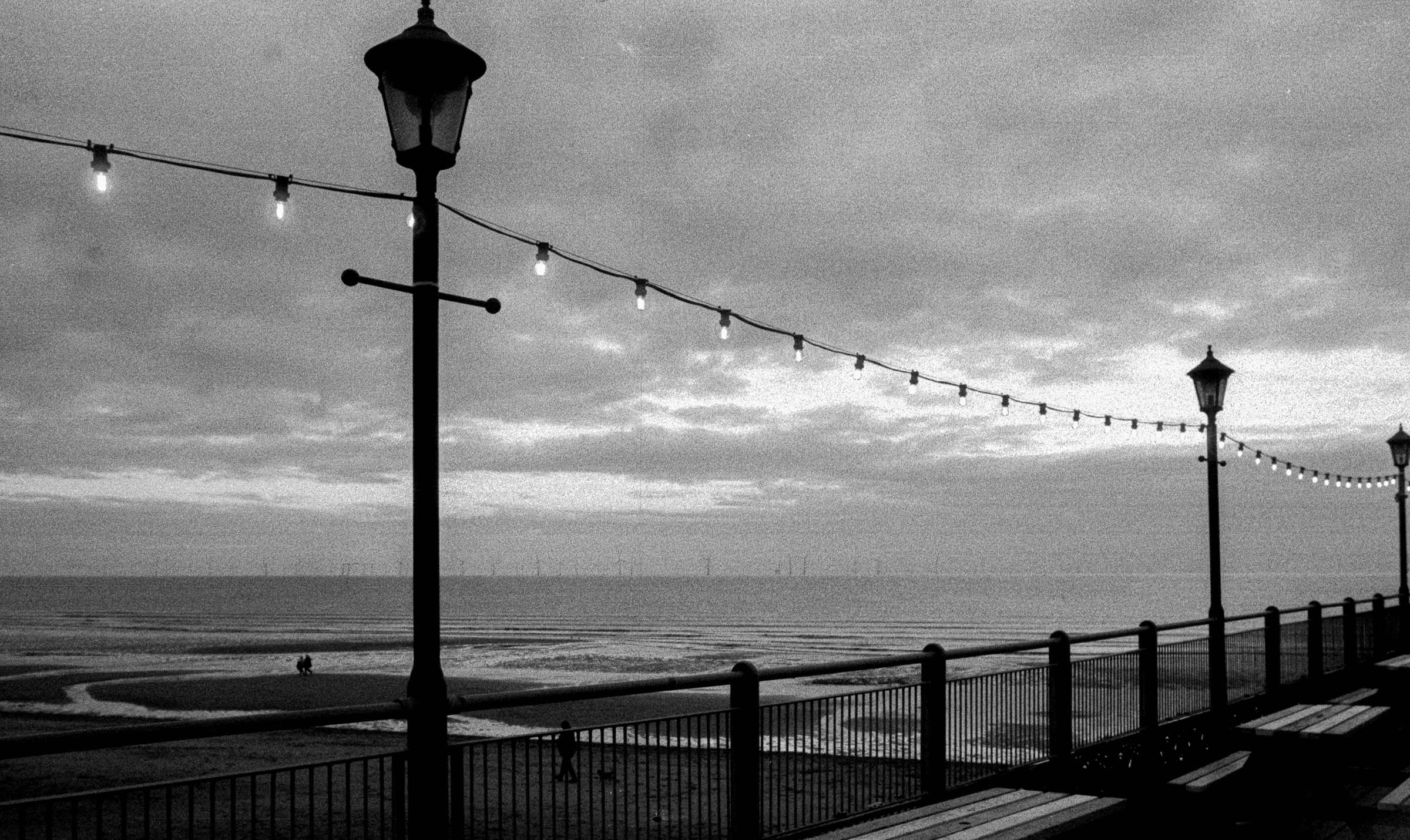
But that I guess is the risk you take with film. It’s an imperfect and imprecise process. Any mistakes along the way risk ruining the entire product of your endeavour. The stakes are not quite as high with digital photography as many errors around exposure etc can be remedied in post-processing.
Despite this, for better or worse, I have nailed my colours to the analogue film mast. There are definitely many downsides (cons) to film photography but I’m invested - emotionally and financially - in it. I’m smitten by the creative process and how my photos look and feel as a result.
Conversely we all know there are so many pros to digital photography. But there is a con also that I think goes under the radar. As technological progress accelerates, digital cameras become ever more capable but they also become ever more complicated. I gave the Fuji XT-2 a fair trial but can’t get on with it. I found I was spending more time thinking about the settings on the camera than focusing on what I was photographing. Maybe that balance would change with time and use but for me photography is about feel rather than think. The tool you use has to become part of you, an extension of how you feel about you are seeing. I just couldn’t see the XT-2 fulfilling that brief so I’ll stick with my trusty Canon DSLR for those occasions when film is just too impractical.
Film broke my heart this week. But it also reminded me why I fell for it in the first place. So the Fuji can go back on eBay. I’m sticking with the stuff that frustrates me, delights me, and occasionally ruins my day — because it also makes my favourite pictures.
ADVERT: Fuji XT-2 for sale - hardly used. Perfect for the digital photography enthusiast!